
EAIC Act and the IPCMC bill in light of the death-in-custody of Syed Azlan

Previously (link), I outlined the key points in the life and death of Syed Azlan.
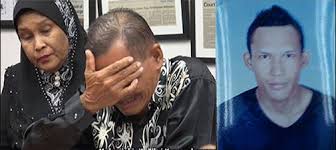
Syed Azlan was small, held two jobs, supported his parents, had no police record. Aged 25 years, he died within hours of being arrested by three policemen while two other policemen stood guard. His corpse had 61 injuries. Neither weapons nor drugs were found with him.

The policemen destroyed evidence and withheld a material witness. The police investigation did not result in anyone being charged in court. There is no reason to believe any of the policemen were subjected to internal discipline. In fact, the leader of the assault was promoted.
Much of the above information is from an investigation report published by the Enforcement Agency Integrity Commission (EAIC). The EAIC is soon to morph into the IPCC (Independent Police Conduct Commission), contained within the “IPCMC bill” which may become law in March 2020.
As I promised in my previous article, this one will look at the EAIC Act and the IPCMC bill in light of the death-in-custody of Syed Azlan.
As I also said in the previous article, the Public Prosecutor (PP) charged three of the policemen in court, twice – the second time on appeal. Both times the three policemen were acquitted and discharged. And, there is reason to believe the PP mounted a sham prosecution. Later, the Attorney General’s Chambers (AGC) defended the three policemen and others in a civil prosecution launched by Syed Azlan’s family.
Did the EAIC contribute to justice for Syed Azlan and his family? Did the EAIC contribute to public confidence in the police? Did the EAIC contribute to police reform?

Eight months after Syed Azlan died, the EAIC “formed a task force” and began a full investigation, which it completed in four months. (Unlike the MACC, the EAIC must form a task force, per section 17, before it can commence a full investigation.)
The EAIC requested and received documents from the police. The documents included only those which would normally be given to the family of the deceased during an inquest.
The documents DID NOT include (“CPC 112”) statements made by the policemen and DID NOT include results of internal investigations by JIPS, the Police Department for Integrity and Compliance to Standards.
The EAIC did not say whether, at the time it formed its taskforce, JIPS had conducted or completed its own investigation. This is important because the EAIC Act, in section 29, prevents dual investigation: if the EAIC is investigating, JIPS must cease any investigation it has begun.
The EAIC report is silent about the findings of the police (internal) investigation. Note: Dual investigation is not prevented in the IPCMC bill.
The EAIC interviewed witnesses.
The interviews were recorded as 112 statements. So, the statements could not be released to the family. This is in marked contrast with SUHAKAM (the Human Rights Commission of Malaysia) which, during the public inquiry into the disappearances of Amri Che Mat and Raymond Koh, released interview statements to families.
In its public report, the EAIC named the non-policemen it interviewed. But it did not name the policemen whom it said should be subjected to disciplinary proceedings and be charged with criminal offences.
The EAIC chose not to reveal to the family any information beyond what was included in the public report – although section 52 of the EAIC Act allows it to disclose “secret” information.
The family had to subpoena the legal officer of the EAIC to testify in their civil suit against the policemen, their superiors and the government. The PP objected to admitting the findings of the EAIC. Thankfully the PP was overruled by the judge.
So, although the EAIC stepped in late, it produced and published an evidence-based report. It found that policemen had committed misconduct and serious crimes. It recommended disciplinary and criminal actions. Late, but good.
However, because the coroner’s inquest – which is mandated by the Criminal Procedure Code (CPC) – was bypassed and because of EAIC secrecy provisions, it was harder for the families to get the information they needed to pursue a civil action.
The EAIC’s contribution to public confidence in the police would have been positive if JIPS (and the Police Force Commission!) had taken disciplinary action against the officers and announced the same publicly.
It would also have been positive if the PP (AGC) had determinedly pursued criminal cases against the officers. Since neither the police nor the AGC took these actions, the EAIC’s work caused a further dip in public confidence in the police.
With respect to police reform, the EAIC’s contribution could have been positive if the police had made the revisions in procedures, implemented the training which the EAIC recommended and said so publicly. The police did not. And the government sat on its hands.
Now let’s consider the IPCMC. The IPCMC has less investigative power than the EAIC. Unlike the EAIC, the IPCMC cannot use the threat of seizure without warrant or the threat of public hearings.
Most importantly, the IPCMC bill DOES NOT mandate that deaths in police custody must be investigated from beginning to end by the IPCMC.
The IPCMC bill DOES require the IPCC to first set up a task force to do the investigation. I do not see how A-Z investigations of deaths and grievous injuries involving the police can be possible if the Commissioners must first formally appoint a task force.
I invite Home Minister Muhyiddin Yassin (please, NOT law minister V K Liew) to tell the nation how a future Syed Azlan case will be handled.
Will the police still investigate themselves? Will IPCC officers be the first to examine the incident scene? Will they provide all information coroners’ need in order to determine the cause of death? Will the CPC be amended to enable this?
Will the IPCC publish reports like the EAIC has? Note that the EAIC Act, in section 30(5), mandates that the EAIC shall make its findings public, but there is no such provision in the IPCMC Bill.
In relation to cases such as that of Syed Azlan’s death-in-custody, I invite proponents of the IPCC in the IPCMC bill to say why the IPCC is better than the EAIC.
Rama Ramanathan is an activist for Citizens Against Enforced Disappearances
The views expressed here are those of the author/contributor and do not necessarily represent the views of The Leaders Online.
