
Breaking News
BN and PAS to announce Melaka candidates tomorrow
MELAKA, Oct 23 — Barisan Nasional (BN) will announce its candidates for the Melaka State Election,
...Kuching international school beefs up security with three police officers after teacher attacked
KUCHING, Oct 22 — Tunku Putra-HELP (TPH) International School has confirmed that it will immediately enhance
...Civil servants effectively banned from using Waze app due to Israel ties
KUALA LUMPUR, Oct 21 — Civil servants have been banned from using the Waze navigation app with
...Govt looking at tougher penalties to tackle cable theft across public transport sector
KUALA LUMPUR, Oct 20 — The Transport Ministry is in the midst of drafting necessary measures
...Flood victim count at PPS records slight increase; Royal Malaysian Navy sends 100 personnel to Pangkor
IPOH, Oct 19 — A total of 156 flood victims from 50 families are seeking shelter
...Father and daughter killed as container crushes car in Sepanggar, police detain driver
KOTA KINABALU, Oct 19 — A 49-year-old trailer driver has been detained to assist investigations after
...
Trump announces tariffs on all countries, including Malaysia at 24pc
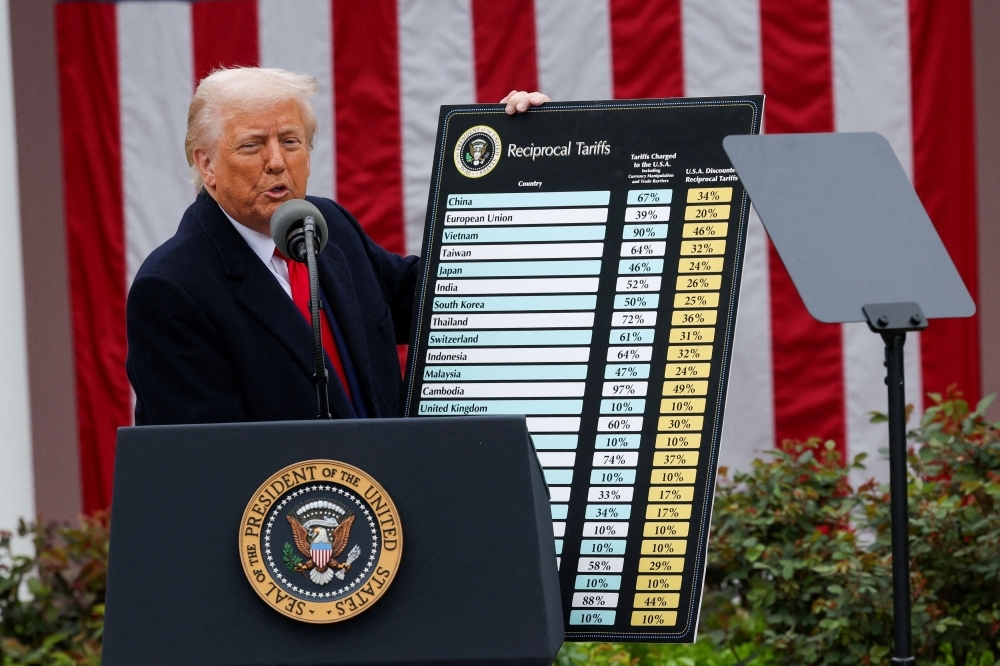
KUALA LUMPUR, April 3 — Malaysia will face a 24 per cent tariff on goods entering the United States beginning April 9, as Washington rolls out sweeping new import duties on its trading partners.
The US government has introduced a broad-based reciprocal tariff policy, with duties ranging from 10 to 50 per cent.
Malaysia’s neighbouring economies are also affected, with Vietnam to face a 46 per cent rate, Cambodia 49 per cent, Thailand 37 per cent, Indonesia 32 per cent, and the Philippines 18 per cent.
Singapore was spared from the higher tier and will remain at the base rate, while China will see a 34 per cent reciprocal tariff.
According to US President Donald Trump, the move is part of a wider effort to address structural trade imbalances, which he said had hollowed out the country’s manufacturing sector and undermined national security.
“The trading relationship between the United States and its trading partners has become highly unbalanced, particularly in recent years,” read the executive order establishing the policy, published on the White House website.
“These structural asymmetries have driven the large and persistent annual US goods trade deficit.
“Permitting these asymmetries to continue is not sustainable in today’s economic and geopolitical environment because of the effect they have on US domestic production.”
The administration also warned that these trade imbalances have weakened critical supply chains and left the US increasingly vulnerable to global disruptions.
The tariffs are expected to remain in place until the US determines that trade terms have become more reciprocal.
