
Breaking News
Kuching international school beefs up security with three police officers after teacher attacked
KUCHING, Oct 22 — Tunku Putra-HELP (TPH) International School has confirmed that it will immediately enhance
...Civil servants effectively banned from using Waze app due to Israel ties
KUALA LUMPUR, Oct 21 — Civil servants have been banned from using the Waze navigation app with
...Govt looking at tougher penalties to tackle cable theft across public transport sector
KUALA LUMPUR, Oct 20 — The Transport Ministry is in the midst of drafting necessary measures
...Flood victim count at PPS records slight increase; Royal Malaysian Navy sends 100 personnel to Pangkor
IPOH, Oct 19 — A total of 156 flood victims from 50 families are seeking shelter
...Father and daughter killed as container crushes car in Sepanggar, police detain driver
KOTA KINABALU, Oct 19 — A 49-year-old trailer driver has been detained to assist investigations after
...Baby’s body found in Kuala Berang drain missing head and hand, police investigating
KUALA BERANG, Oct 17 — The body of a baby was found in a drain in
...
How Malaysia’s Indian communities celebrate New Year together
KUALA LUMPUR, April 14 — Four Indian communities in Malaysia — Tamils, Malayalees, Bengalis and Sikhs — are set to celebrate their respective New Year festivals on April 14, each rooted in distinct regional cultures but united by themes of renewal, reflection and tradition.
The mid-April celebrations, which coincide with the start of spring or summer across India, bring together a rich tapestry of rituals, food, and family gatherings.
From mango-leaf garlands and floral arrangements to ceremonial feasts and sacred recitations, these festivals highlight the diverse ways Indian heritage continues to thrive in Malaysia.
Here, Malay Mail takes a closer look at the festivities.
Chittirai Puttandu: Tamil New Year of tastes and traditions
Chittirai Puttandu, also known as “Varusha Pirappu” (the birth of a year), falls on the first day of the Chithirai month in the Tamil calendar.
Tamils prepare for the day by tying fresh mango leaves at the entrances of homes and drawing intricate kolam patterns using rice powder.
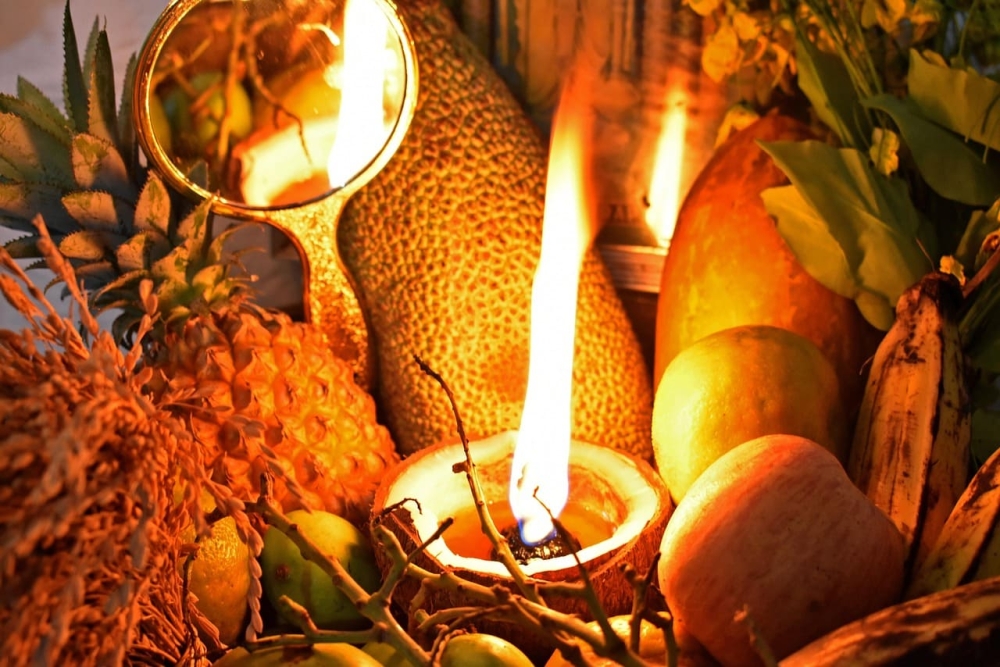
A tray with fruits, flowers, and traditional sweets is placed at the prayer altar, where offerings are made to deities.
Families don new clothes, visit temples, and gather for a festive vegetarian meal typically served on banana leaves.
The feast includes dishes like sambar, pumpkin curry, mango pachadi, vadai, payasam, pongal, and kesari, each contributing one of the six tastes — sweet, sour, salty, spicy, bitter and astringent — symbolising the full range of life’s experiences.
Vishu: A golden start to the Malayalee New Year
Vishu marks the first day of the Medam month in the Malayalam calendar and is one of the most cherished celebrations among Malayalees.
The night before, families set up the Vishukkani, which means “the first sight” in Malayalam, an auspicious arrangement placed at the altar, featuring rice, fruits, yellow konnapoo flowers, gold, coins, a mirror, and an image of Lord Krishna.
At dawn, family elders guide younger members — eyes closed — to view the Vishukkani first, believed to bring prosperity for the year ahead.
Homes are decorated with floral pookalam designs, and elders present kaineetam, monetary gifts given as blessings.
A grand vegetarian meal called Vishu Sadya is served, often comprising multiple traditional dishes on banana leaves.
Pohela Boishakh, the Bengali New Year, is observed on the first day of Boishakh in the Bengali calendar and is widely celebrated in West Bengal, Bangladesh and among the diaspora.
Doorways are decorated with alpona — traditional designs made with rice paste — while prayers are offered to Lord Ganesha and Goddess Lakshmi for blessings and prosperity.
Married women often wear garad sarees with red borders, while men wear white kurtas and dhotis, with red and white symbolising purity and prosperity.
Bengali traders mark the occasion with Haal Khata, the ceremonial opening of new red ledger books to start the financial year afresh.
A celebratory feast typically includes rice, fish dishes, green chillies, onions, and a variety of traditional sweets.
Vaisakhi: Harvest, heritage and the birth of the Khalsa
Vaisakhi, observed by Sikhs across the world, marks both the spring harvest and a defining moment in Sikh history.
The day commemorates the founding of the Khalsa — the Sikh warrior order established by Guru Gobind Singh in 1699 — when the first five Sikhs, or Panj Pyare, were initiated.
Khalsa Sikhs uphold five sacred symbols known as the Five Ks: kesh (uncut hair), kara (steel bangle), kanga (wooden comb), kachera (cotton undergarments), and kirpan (ceremonial sword).
Celebrations typically begin with a 48-hour Akhand Path, the uninterrupted recitation of the Sri Guru Granth Sahib — the 1,430-page Sikh holy scripture — in gurdwaras.
On Vaisakhi Day, a new Nishan Sahib (Sikh flag) is ceremonially raised after being purified in milk and water.
Community kitchens at gurdwaras serve langar, a free vegetarian meal that reflects the Sikh values of equality and service.
