
Viral snubs mark Japan PM Takaichi’s tumultuous first outing to China
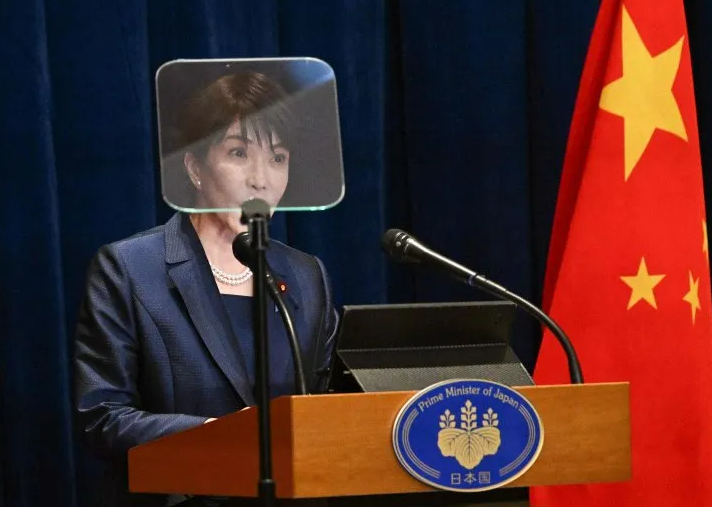
TOKYO, Nov 20 — Japanese Prime Minister Sanae Takaichi got a cold reception in her first outing to China, but Beijing’s “blatant” snub — including a visibly scaled-down welcome — could galvanise her conservative base, experts said on Friday.
Her trip to Shenzhen for the Asia-Pacific Economic Cooperation (Apec) summit marked the first time she met Chinese President Xi Jinping face-to-face since her comments about Taiwan last year plunged relations between the two major Asian powers to historic lows.
Takaichi suggested that Tokyo could intervene militarily in the event that China attacked Taiwan and a furious China, which views the democratic island as part of its territory, retaliated with trade restrictions and warned its citizens not to travel to Japan.
That backdrop meant “there was little she could expect” from the trip, and “little was indeed achieved in terms of Japan-China relations”, Noriyuki Kawamura, a professor emeritus at Nagoya University of Foreign Studies, told AFP.
Takaichi, as expected, failed to secure a formal sit-down with Xi on the Apec sidelines.
She was greeted by relatively low-ranking officials on arrival in Shenzhen and without the elaborate performances that welcomed other world leaders, prompting headlines at home about China’s “blatant” snub.
Takaichi was also seen struggling to step off her plane because of what appeared to be an unusually large gap between the plane’s door and the top of the boarding stairs.
That prompted online speculation it had been done intentionally by Beijing to embarrass her.
Cold shoulder
A mostly expressionless Xi twice exchanged handshakes with Takaichi during the two-day forum — first very briefly and then for about 10 seconds as he listened to her speak with a beaming smile on her face.
However, experts say the cold shoulder might not be all bad news for her domestically, potentially stoking support from the most hardcore of pro-Takaichi voters.
“The way they see it, she didn’t give in to the snub she got, but shook hands with (Xi) as many as two times with dignity,” Kawamura said.
Yu Uchiyama, a political science professor at the University of Tokyo, also told AFP that China’s chilly reception was unlikely to cost her popularity at home, pointing out that public support for her didn’t wane even after her Taiwan statement a year ago.
“I wouldn’t be surprised to see her loyal supporters become upset by the way she was mocked and grow more resentful toward China,” Uchiyama said.
A day after the summit ended, China again said Japan’s “most urgent task is to correct its wrong words and actions on the Taiwan issue as soon as possible”, according to a foreign ministry spokesman in Beijing.
Takaichi’s critics at home, however, saw the Apec summit as proof of Japan’s diminished global standing under her stewardship and her lack of diplomatic acumen.
Footage circulated widely online of Takaichi approaching President Donald Trump after a group photo and patting him on the back, only to be ignored by the US leader who instead walked away with Xi.
That viral image, coupled with Trump’s historic trilateral summit with Xi and Russian counterpart Vladimir Putin, fed social media narratives that she is not taken seriously on the global stage.
“Since when did Japan become such a shameful country? The whole world is laughing at us,” one post on X said.
“It is fatal that Trump — the leader of Japan’s ally — ignores her like this. How much is she hated?” another said.
Still, concerns for Japan’s global reputation could easily be swept aside by a recent surge in distrust towards foreigners that will ultimately help sustain Takaichi’s popularity, Uchiyama said.
Complaints about overtourism and soaring land prices linked to foreign investment have sparked Takaichi’s push for tighter control of visa rules, prompting voters sceptical on immigration to coalesce around her policies.
On the back of this simmering sentiment “resembling xenophobia”, Uchiyama said, it is possible that “people will start to think, ‘why is Takaichi treated so badly overseas when she works so hard in her own country?’”
