
Johari Ghani: Umno must accept reality of 26 seats, face internal weaknesses
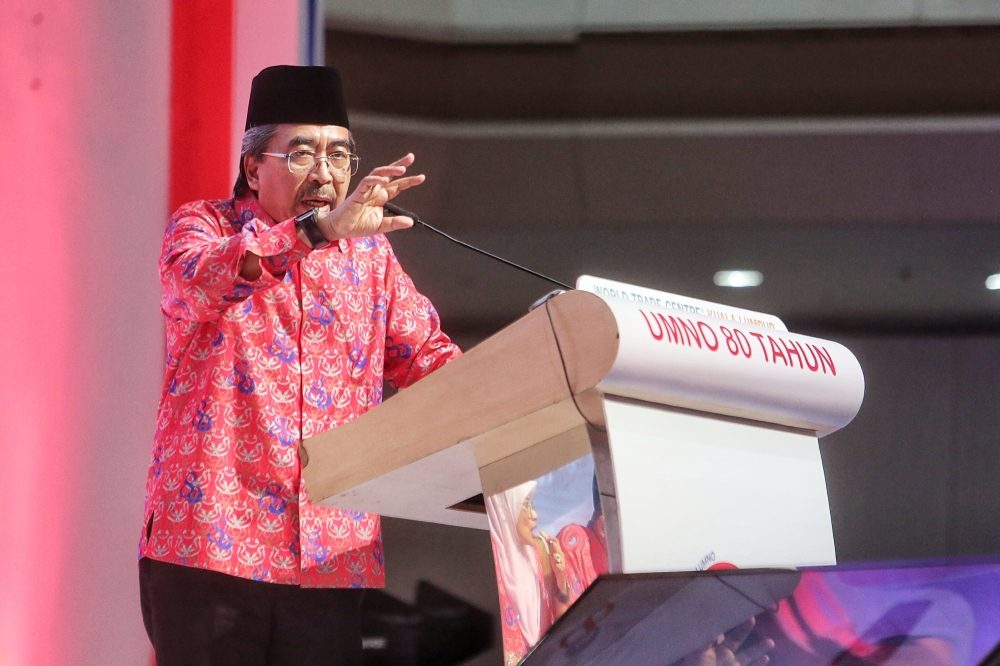
KUALA LUMPUR, May 2 — Umno vice-president Datuk Seri Johari Abdul Ghani today said the party is in a rebuilding phase and must accept its current political reality, including holding only 26 parliamentary seats and no longer being the ruling party.
He said Umno’s long history of political dominance and success must now be followed by honest reflection as the party works to regain its strength.
“Umno has experienced a long era of glory. It has also felt the pain of decline from that period of success,” he said in his speech at Umno’s 80th anniversary here today.
Johari said any political recovery must begin with awareness of the party’s current position, warning that no organisation can move forward without first acknowledging reality.
“Before a party can rise, it must first have awareness. No one can wake up without being conscious. In the same way, the party must be aware of the current reality.
“Among the realities is that Umno now holds only 26 parliamentary seats. It must also acknowledge that it is no longer the ruling party and that voters today have many choices and diverse political preferences,” he added.
Johari said Umno had previously failed to give sufficient attention to younger voters, many of whom were not politically engaged with the party at the time.
However, he said the rise in youth participation in politics now made it essential for the party to adapt as part of its rebuilding efforts.
He said rebuilding after losing power is always difficult, and that historical success alone could no longer be used to appeal to future voters.
Johari said Umno’s reduced parliamentary presence was due to several factors, including a more competitive political environment.
“Since Umno is no longer the dominant governing party, Malaysia now has a more dynamic political landscape with a stronger opposition and emerging parties that grow stronger with each election,” Johari said.
“Second, voters today are more critical and better informed, especially due to technology and digital exposure. Social media has made citizens more analytical and demanding in their political expectations,” he added said.
He said internal conflict had also contributed to divisions within Umno, as differences of opinion that were previously managed internally were now being exposed publicly through social media, weakening party unity.
This, he said, had allowed other parties to draw support away from Umno, particularly among Malay voters.
Johari also cited shifting societal attitudes, saying voters now prioritise transparency, accountability and integrity.
“Most now live in urban areas, and their thinking is more urban, rational, and economy-driven.
“Their focus is on cost of living, employment, and personal opportunities, rather than political loyalty as in the past,” he said.
He said these changes had significantly influenced voting behaviour, including how political narratives are received and judged.
