
Nancy Shukri says new care standards will safeguard dignity, rights across Malaysia’s care services
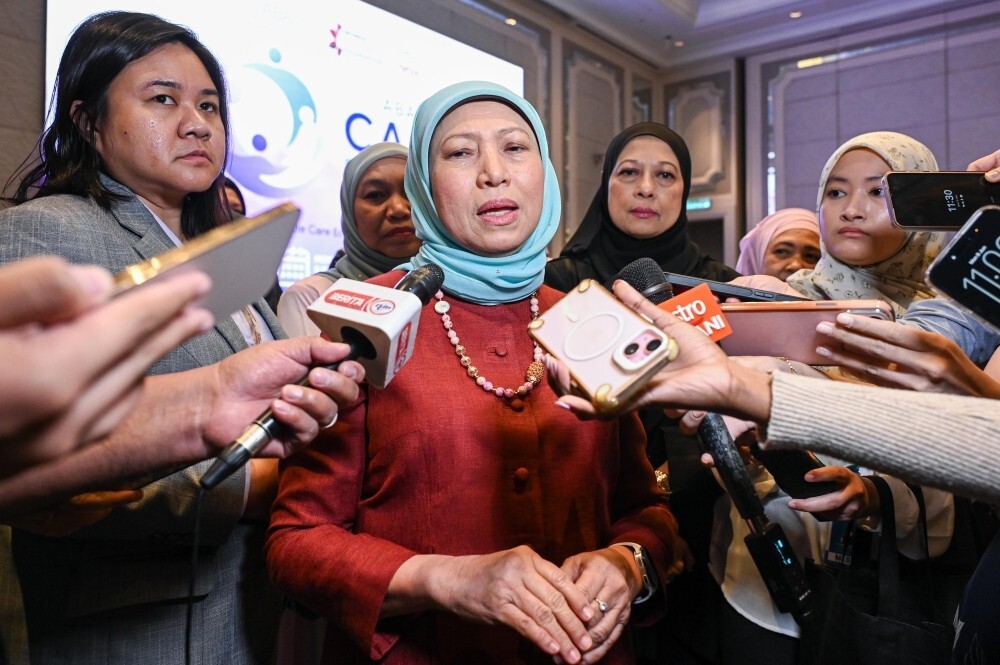
KUALA LUMPUR, June 8 — The National Care Standards for Older Persons and Persons with Disabilities is expected to be launched in October this year as part of ongoing efforts to strengthen Malaysia’s care economy framework.
Women, Family and Community Development Minister Datuk Seri Nancy Shukri said the standards are currently under development, following continuous discussions to establish clear benchmarks for quality care services, including expectations for providers within the care sector.
“We are developing standards of care. This is still in the discussion stage and is expected to be launched in October.
“I am pleased to have heard the views of the industry players involved, including the challenges faced and the suggestions for improvement put forward,” she said after delivering her keynote address at the ABAC Malaysia Care Economy Roundtable 2026 here today.
She also noted that ongoing discussions continue to generate new ideas, reflecting the evolving nature of the care sector, which requires continuous refinement and policy enhancement.
Earlier in her keynote address, she said the standards would serve as a key governance instrument to strengthen the quality, safety and accountability of care services nationwide.
“They are intended to establish minimum standards of care, safeguard the dignity and rights of care recipients, and promote greater consistency in service delivery across institutional, community-based and home-based care settings,” she said.
Nancy said investment in the care economy is no longer merely a social welfare issue, but a critical economic imperative to ensure Malaysia’s future productivity and resilience.
She said addressing caregiving gaps and enabling greater labour force participation could contribute about RM77 billion annually to the national economy, equivalent to around five per cent of gross domestic product.
Citing research by the Institute of Strategic and International Studies (ISIS) Malaysia, the minister said unpaid care and domestic work are estimated to be worth RM379 billion annually, while about 3.2 million Malaysians face constraints in full labour force participation due to caregiving responsibilities.
Nancy also noted that Malaysia is undergoing significant demographic changes, with the total fertility rate declining from 6.0 births per woman in 1960 to around 1.6 currently, below the replacement level of 2.1.
To address these challenges, she said the Malaysia Care Strategic Framework and Action Plan 2026-2030 represents an important step towards establishing a more structured and coordinated national direction for the care ecosystem.
