
Zambry: Higher Education Ministry unveils 2026-2030 plan to strengthen graduate employability
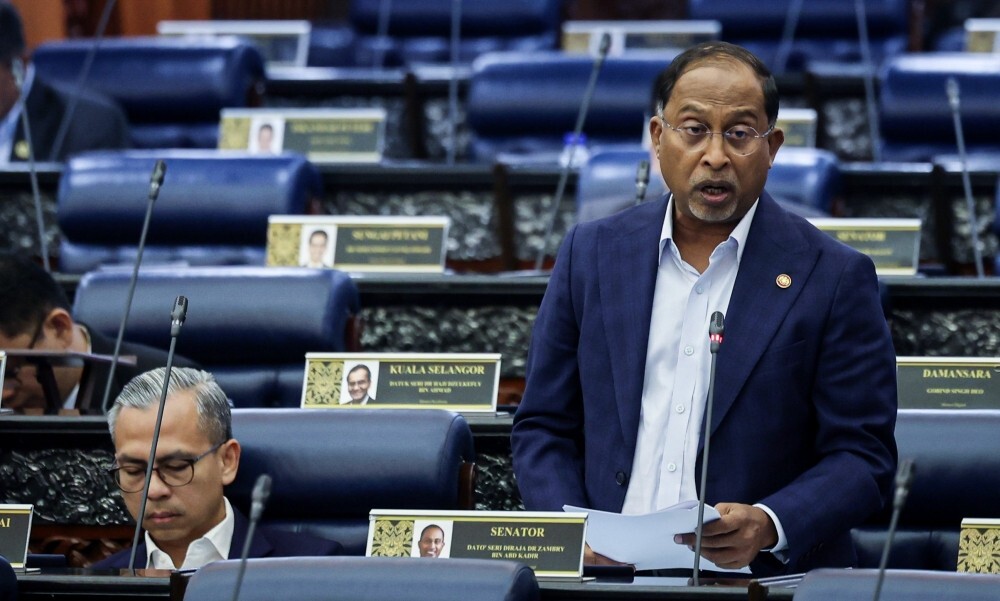
KUALA LUMPUR, Aug 20 — The Higher Education Ministry (MOHE) today launched the 2026-2030 Graduate Employability Strategic Plan (PSKG) to strengthen the country’s graduate employability ecosystem through a more comprehensive and integrated approach.
Its minister Datuk Seri Zambry Abd Kadir said the plan was formulated to produce graduates who can adapt to changes in the world of work, meet current and future market demands and remain competitive in line with the country’s development aspirations.
He said one of the plan’s key drivers was upskilling programmes carried out through strategic partnerships with industry players to ensure that the talent produced meets the specific needs of the job market.
“Therefore, we are implementing the Industry in Campus programme, particularly involving Malaysia’s technical universities and other universities such as Universiti Sains Malaysia (USM), research universities and other comprehensive universities,” he said.
He was speaking to reporters after officiating the launch of PSKG 2026-2030 and the 2026 MOHE Graduate Employability Conference (PKGKPT) here today.
Zambry said the plan, anchored by the vision ‘Adaptive, Agile and Resilient Graduates as Catalysts for a High-Income Nation’, also involved cross-ministerial collaboration with the Economy Ministry, Ministry of Investment, Trade and Industry (MITI) and Human Resources Ministry (KESUMA).
“We always provide room for flexibility within the existing system, allowing policies to be reviewed and adjusted according to market needs.
“Overall, the planning we have undertaken is progressing well, but we need to periodically review market requirements,” he said.
On the target for new job creation, Zambry said workforce requirements should be determined through joint assessment and consensus among the relevant ministries and agencies to accurately reflect actual market demand.
“We do not assess this based on the ministry alone. We need all agencies, the Ministry of Economy, MITI and other ministries to come together to determine the number of workers required,” he said.
Zambry said workforce requirements needed to be assessed in greater detail across different qualification levels, rather than focusing solely on degree holders.
“For example, in the electrical and electronics (E&E) sector, it is often said that Malaysia is short of nearly 60,000 engineers. But if we look at it more closely, the demand is actually across engineering-related industries.
“This means the requirement is not necessarily at degree level, but may also be at diploma or certificate level. At USM, for example, the university is refining these requirements for the semiconductor field,” he said.
On the 2026 PKGKPT, Zambry said the conference, jointly organised with the National Defence University of Malaysia (UPNM), served as a national strategic platform to discuss various issues, including job mismatches, starting salaries and stronger industry-academia collaboration.
At the event, MOHE also presented the 2021-2025 Graduate Employability Excellence Performance Awards to public higher education institutions (IPTA) that had demonstrated outstanding and consistent performance over the five years.
