
Breaking News
Govt looking at tougher penalties to tackle cable theft across public transport sector
KUALA LUMPUR, Oct 20 — The Transport Ministry is in the midst of drafting necessary measures
...Flood victim count at PPS records slight increase; Royal Malaysian Navy sends 100 personnel to Pangkor
IPOH, Oct 19 — A total of 156 flood victims from 50 families are seeking shelter
...Father and daughter killed as container crushes car in Sepanggar, police detain driver
KOTA KINABALU, Oct 19 — A 49-year-old trailer driver has been detained to assist investigations after
...Baby’s body found in Kuala Berang drain missing head and hand, police investigating
KUALA BERANG, Oct 17 — The body of a baby was found in a drain in
...Cable theft attempt halts power on Kajang Line for an hour, police report lodged
KUALA LUMPUR, Oct 16 — An attempted cable theft between the Phileo Damansara and Pusat Bandar
...Pakatan 95pc done with Melaka candidate talks
KUALA LUMPUR, Oct 15 — Discussions on the list of Pakatan Harapan (PH) candidates for the
...
Sabah mufti backs public caning for Shariah offences in Terengganu, says similar punishment already done in Tawau
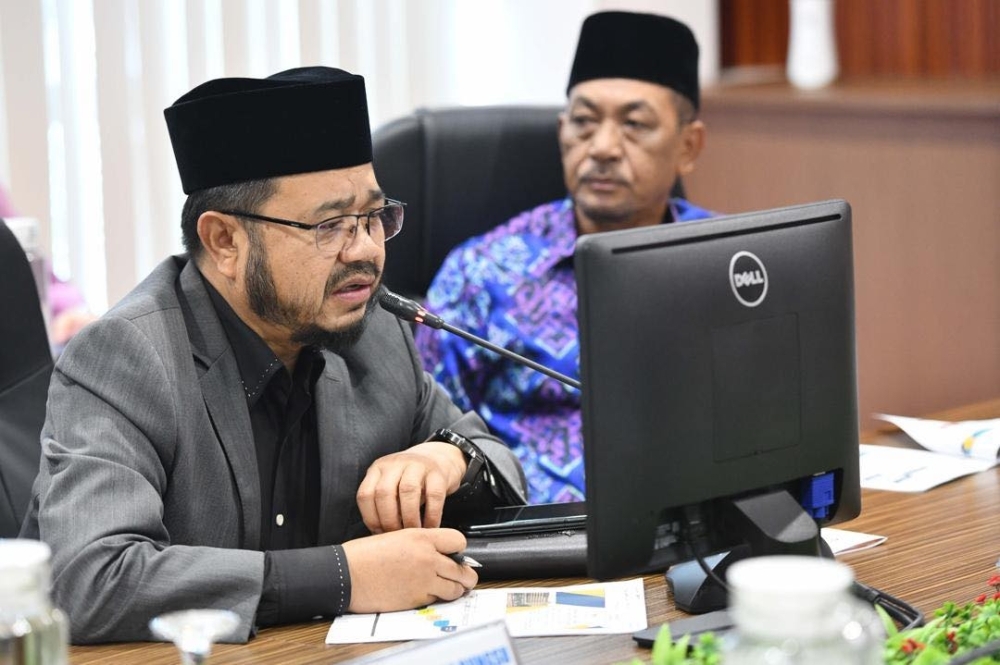
KOTA KINABALU, Jan 3 — Sabah State Mufti, Datuk Bungsu @ Aziz Jaafar, supports the implementation of the six whippings as a punishment for offenders of Shariah law in Terengganu recently.
Bungsu said that the punishment aligns with the principles of “takzir” in Islamic law. He added that the “takzir” referred to punishments determined by religious authorities or the government for offences whose specific penalties are not explicitly outlined in the Shariah.
Hence, the execution of this punishment is seen as consistent with the requirements of Shariah law and aims to serve as a deterrent to the community.
“In Sabah, people say if something is hidden or kept secret, no one will know about it, and it will not serve as a deterrent. That is one of the reasons why such punishments need to be carried out in public (for selected individuals).
“However, this punishment is carried out under strict conditions. It cannot be recorded or made viral and can only be witnessed by certain individuals. This ensures that it aligns with the philosophy of Shariah law,” he said to reporters after the 30th Haul (death anniversary) Ceremony of the late Tun Datu Mustapha Datu Harun at the Tun Datu Mustapha Memorial Park in Putatan yesterday.
Nevertheless, Bungsu also cautioned against politicising or turning this issue into a subject of religious debate, as it reflected the “ijtihad” (independent reasoning) of the religious authorities in Terengganu.
He emphasised that the “ijtihad” decision made by Terengganu cannot be annulled by other parties.
In Sabah, he noted that similar punishments have previously been implemented, for example, in Tawau.
“I was informed by the Chief Shariah Judge of Sabah that this punishment has indeed been carried out, such as in Tawau, although I cannot recall the exact date.
“Every state has its own approach. If any state disagrees, it is beyond their jurisdiction to overturn another state’s ‘ijtihad”. We support this implementation as it complies with Islamic law,” he said.
The recent punishment of six strokes of the cane for a male Shariah offender in Terengganu has garnered attention from various parties. However, Bungsu urged everyone to understand the context of the ruling before passing judgment.
