
Red light, green light? Iran closes Hormuz strait again, threatens crossing vessels
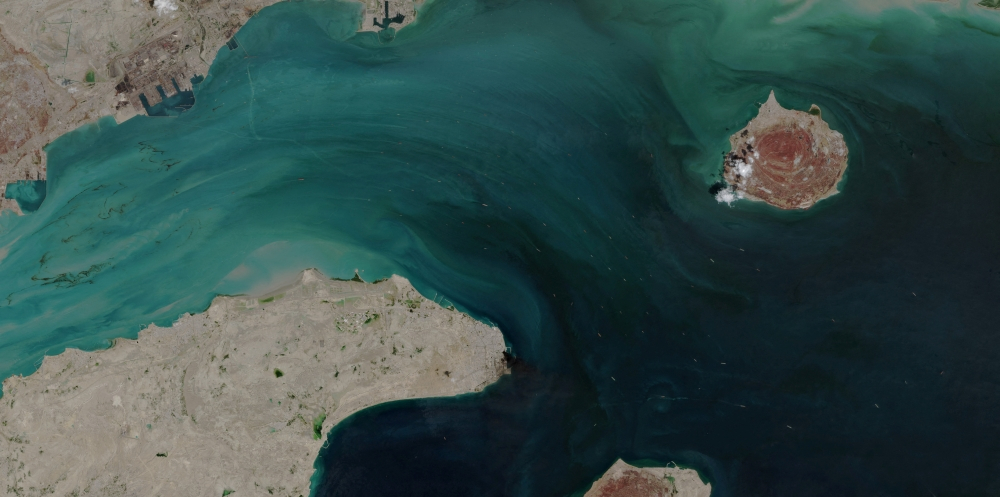
TEHRAN, April 19 — Iran’s military declared the Strait of Hormuz closed again on Saturday, prompting ships to abandon attempts to transit and President Donald Trump to warn Tehran against trying to “blackmail” the United States.
On Friday, Tehran had declared the strait, which usually carries a fifth of the world’s oil and liquefied natural gas, open after a ceasefire was agreed in Israel’s war with Iran’s ally Hezbollah in Lebanon.
This prompted elation in global markets and sent oil prices plunging, but with Trump insisting that a US naval blockade of Iranian ports would continue until a deal to end the wider war was concluded, Tehran said it was shuttering the strait once more late Saturday morning.
Iran’s central military command said that, in response to the US blockade, Hormuz was again “under strict management and control of the armed forces”. The powerful Revolutionary Guards warned that any effort to cross “will be considered cooperation with the enemy, and the offending vessel will be targeted”.
Trump had previously said the two sides were “very close” to striking a deal, but following Iran’s announcement on Saturday, he insisted Tehran “can’t blackmail us”, even as he maintained communications were ongoing.
“We’ll be talking about Iran later. We have very good conversations going on,” he added, accusing Tehran of getting “a little cute” with its recent moves.
Iran’s top national security body said during a visit by the military chief of mediator Pakistan that “new proposals have been put forward by the Americans, which the Islamic Republic of Iran is currently reviewing and has not yet responded to”.
It went on to say, however, that Iran’s negotiating delegation would not offer “even the slightest compromise, retreat or leniency” in talks with Washington.
Ships threatened
A handful of oil and gas tankers crossed the Strait of Hormuz early Saturday during the brief reopening, tracking data showed, but others retreated and tracking platforms showed hardly any vessels crossing the waterway by the late afternoon.
A UK maritime security agency said Iran’s Revolutionary Guards fired at one tanker, while security intelligence firm Vanguard Tech reported the force had threatened to “destroy” an empty cruise ship that was fleeing the Gulf.
In a third incident, the UK agency said it received a report of a vessel in the same area “being hit by an unknown projectile which caused damage” to shipping containers but no fire.
New Delhi later summoned the Iranian ambassador to lodge a protest over a “shooting incident” involving two Indian-flagged ships in the strait, its foreign ministry said.
Speaking at a diplomatic forum in Turkey, Iranian deputy foreign minister Saeed Khatibzadeh said the “Americans cannot impose their will over Iran” with a siege, and suggested the blockade was a violation of the ceasefire that merited “repercussions”.
Meanwhile, in a written message, Iran’s supreme leader Mojtaba Khamenei, who has yet to be seen since taking power, said Iran’s navy “stands ready” to defeat the United States.
Four days left
There are just four days remaining before the end of the two-week ceasefire in the US-Israel war on Iran, launched on February 28.
Nevertheless, Trump has appeared convinced that a deal could be finished shortly, issuing a stream of upbeat social media posts including ones praising mediator Pakistan.
Egypt, which has also been involved in diplomatic efforts, appeared similarly optimistic on Saturday, with Foreign Minister Badr Abdelatty saying Cairo and Islamabad hoped to secure a final agreement “in the coming days”.
He was speaking at the same event in Antalya as Khatibzadeh, who insisted no date had been set for the next round of talks, though Tehran was “very much committed to diplomacy”.
The Middle East war began with a massive wave of US-Israeli surprise attacks on Iran, despite Washington and Tehran being engaged in negotiations at the time.
The conflict rapidly spread across the region, with Iran targeting US interests in the Gulf and Hezbollah dragging Lebanon into the conflict by launching rockets at Israel.
In a sign that the two-week ceasefire remained stable, Iran’s civil aviation agency declared its airspace was open again, with international flights able to transit Iran via the east of the country.
Two major sticking points in the peace talks – Iran’s stockpile of near-weapons-grade enriched uranium and the future of the Strait of Hormuz – appeared up in the air.
Trump declared Friday that Iran had agreed to hand over its 440 or so kilogrammes of enriched uranium, saying: “We’re going to get it by going in with Iran, with lots of excavators.”
But Iran’s foreign ministry had said just hours before that its stockpile, thought to be buried deep under rubble by US bombing in last June’s 12-day war, was “not going to be transferred anywhere”, and that surrendering it “to the US has never been raised in negotiations”.
