
Lynas waste disposal facility reaches 77pc completion as 2031 deadline looms
KUALA LUMPUR, Oct 26 — The permanent disposal facility (PDF) for radioactive waste generated by Lynas Malaysia Sdn Bhd had achieved 77 per cent completion in construction and operations as of Aug 31, with 1.45 million metric tonnes of the 1.467 million metric tonnes of Water Leach Purification (WLP) waste generated having been transferred to the facility.
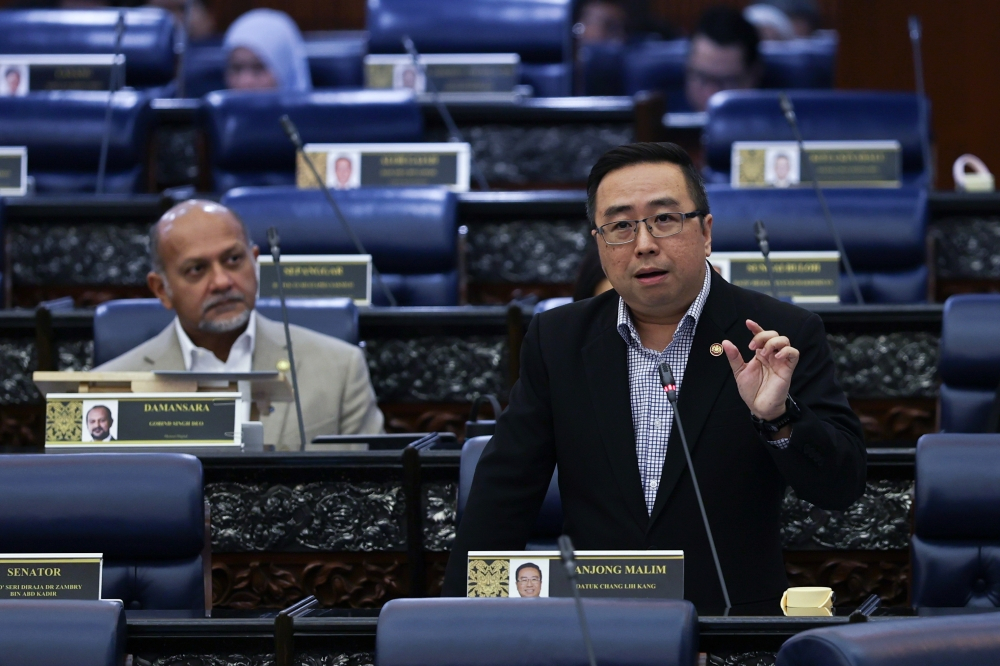
Science, Technology and Innovation Minister Datuk Chang Lih Kang said four disposal cells, designated A, B, C and D, had been completed, while the process of filling the facility with Auto Leach Residue (ALR) waste was ongoing.
“Based on monitoring by the Atomic Energy Department (JTA) up to Sept 10, radiation dose readings outside the PDF were also below 20 millisieverts per year, complying with the dose limit stipulated under Act 304 (Atomic Energy Licensing Act 1984) for radiation workers,” he said during the question-and-answer session in the Dewan Rakyat today.
He was responding to a question from Chow Yu Hui (PH-Raub) on the justification for renewing Lynas’ licence for 10 years, the status of the PDF, the amount of accumulated radioactive waste, and the mechanisms in place to ensure the company stops generating radioactive waste by 2031 and complies with all licence conditions.
Chang said Lynas was required to stop generating WLP radioactive waste before March 2031, while existing waste and waste generated during the period must be treated to reduce its activity concentration to below one becquerel (Bq) per gram using methods proven effective through research and development (R&D).
“This approach aims to reduce and eventually stop the generation of radioactive waste through recycling or reuse, while ensuring that mineral resources are managed sustainably and safely,” he said.
On who would be responsible in the event of a radioactive waste leak, Chang said Lynas was required to monitor the facility within the Lynas Advanced Materials Plant (LAMP) site during the first five years.
This was to ensure that the activity concentration of WLP waste could be reduced to below the control limit of one becquerel per gram stipulated under Act 304.
“Lynas must also continue its R&D on WLP waste, which will be monitored by the JTA. After the five years, if Lynas is still generating radioactive WLP waste, the JTA may suspend or revoke the licence.
“Therefore, the JTA will be responsible for ensuring that Lynas ceases generating radioactive waste by March 2031,” he said.
In March, the government decided to renew Lynas Rare Earths’ operating licence for another 10 years, allowing the Australian mining company to import raw materials containing naturally occurring radioactive materials and process rare earth elements (REE).
