
Loke rules out DAP exit from Pakatan, says slower reforms are the price of governing
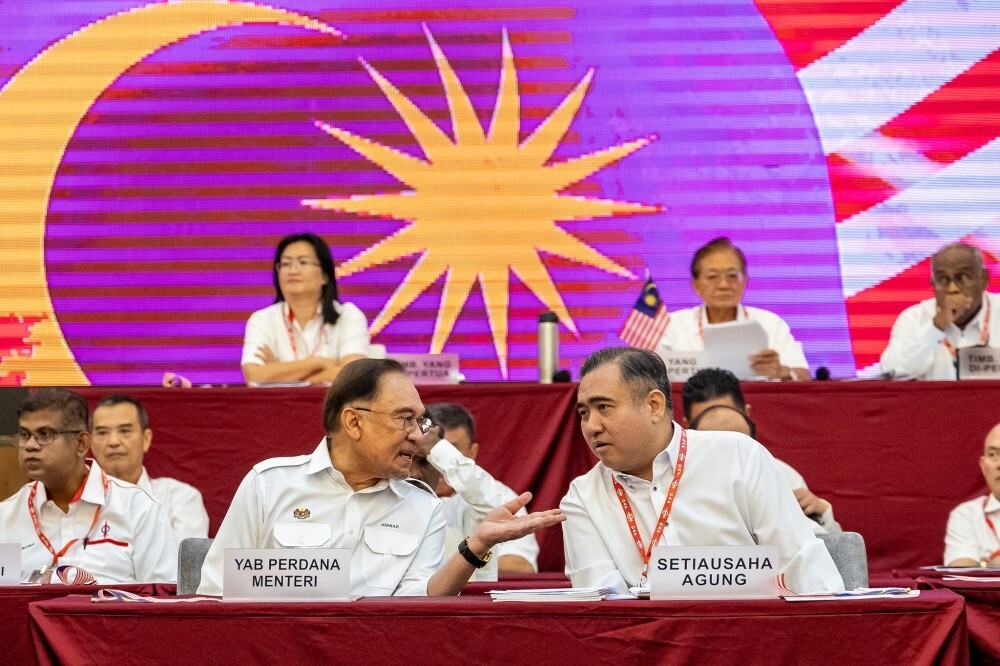
KUALA LUMPUR, July 17 — DAP will not leave Prime Minister Datuk Seri Anwar Ibrahim’s Pakatan Harapan (PH) coalition before the current government’s term ends despite recent electoral setbacks, secretary-general Anthony Loke has said.
In an interview with Singapore-based media organisation CNA, Loke rejected suggestions that DAP should go it alone after disappointing performances in recent state elections, saying governing through a coalition was the only realistic way to shape the country’s future.
“In the context of Malaysian politics, I do not think the DAP can go far if we just go solo,” Loke said.
The remarks come after weeks of scrutiny over DAP’s future within PH following losses in the Sabah and Johor state elections, prompting some observers to question whether the party should reconsider its place in the ruling coalition.
Loke said Malaysia’s demographic makeup and political system meant contesting alone would leave DAP confined to the Opposition benches rather than participating in government.
“You cannot be part of the process of nation-building. You cannot be in the process of governance,” he said.
“If we really want to effect change in a government, in society, you have to be in a position of power … I am a believer in coalition politics.”
He added that withdrawing from PH would only play into the hands of political opponents who wanted to push DAP out of government.
For Loke, the trade-off is clear: slower reforms from within government are preferable to pursuing a purer agenda from the Opposition.
He acknowledged that governing had forced DAP to accept compromises that differed sharply from its years in Opposition, arguing that progress should be measured by policy delivery rather than political rhetoric.
“After becoming the government, I keep on telling them that in government, what matters is delivery,” he said.
“It’s not how loud you shout, but how much you can do within the constraints of coalition politics and within the constraints of the government.”
While DAP would like reforms to move more quickly, Loke said the realities of coalition government meant progress was often slower than supporters hoped.
He cited proposals to limit a prime minister’s tenure to 10 years and to separate the roles of Attorney-General and Public Prosecutor as reforms that had encountered setbacks in Parliament.
“Of course, from the DAP point of view, we would definitely hope that there will be a faster reform pace,” he said.
“But the reality is that some people will try to kill the reform.”
Despite frustrations over the pace of reform, Loke defended the unity government’s broader record, pointing to what he described as consistent economic growth and Malaysia’s improved standing internationally, while conceding that such gains did not necessarily translate into political support.
“As politicians, we know these might not necessarily translate into support on the ground because it might not be felt on the ground,” he said.
Loke also acknowledged that DAP’s reduced haul in the Johor state election and lower non-Malay voter turnout had fuelled concerns within the party, but rejected suggestions that the results amounted to a wholesale rejection of DAP.
“We have faced some setbacks, but it is not a total rejection,” he said.
“If you look at our vote share, it increased compared to the last election. While not at the same percentage as BN, it is still an increase.”
He said the party had to listen to voters and adapt its approach, describing elections as an important form of public accountability.
“That is the beauty of democracy. That’s the beauty of elections, that you send a certain message to the government,” he said.
