
Breaking News
Pakatan 95pc done with Melaka candidate talks
KUALA LUMPUR, Oct 15 — Discussions on the list of Pakatan Harapan (PH) candidates for the
...Police seek witnesses, dashcam footage after fatal Cheras-Kajang crash that killed motorcyclist
KUALA LUMPUR, Oct 13 — Police are appealing to witnesses to a fatal accident involving a
...Special Branch cop makes fresh report with new evidence on alleged assault by border control chief
KUALA LUMPUR, Oct 12 — A Special Branch policeman who alleged he was assaulted by Malaysian
...Yong Peng school had CCTV but none at the crime scene, security firm under probe
KUALA LUMPUR, Oct 5 — The secondary school in Yong Peng, Johor, where a Form Four
...Malaysia launches first phase of Rohingya repatriation to Myanmar
LUMUT, Sept 29 — Malaysia began repatriating around 1,500 Myanmar nationals on Tuesday, launching the first
...Woman worker dies after being trapped in lifter machine in Telok Panglima Garang
KUALA LUMPUR, Sept 25 — A woman worker died after she was believed to have been
...
Having stable policy can boost performance of Sarawak children
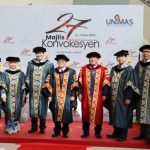
KUCHING , Nov 8 — The Sarawak government is in discussion with the federal government to regain full autonomy in education, said Deputy Premier Datuk Amar Douglas Uggah Embas.
He said a stable education policy coupled with good facilities can improve the educational performance of children in the state.
“With full autonomy in education, Sarawak will be able to coordinate education to local needs, plan innovative programmes, and provide wider opportunities for the growth of knowledge to the young generation of Sarawak.
“This is an important step to ensure that our children receive the best education for a bright future,” he said at the 27th Universiti Malaysia Sarawak (Unimas) Convocation Ceremony at Unimas in Kota Samarahan yesterday.
Uggah, who is the university’s pro chancellor, said the Sarawak government is committed to realising the Post Covid-19 Development Strategy (PCDS) 2030, where one of the important variables is education and human capital development.
“Thus, in order to achieve the target, the state government has planned to offer free education through scholarships at Sarawak government-owned universities and higher education centres by 2026.
“This does not apply only to university and higher education levels, as the focus on first-class human capital development will also commence at the initial level of schooling,” he said.
He pointed out that to achieve the aspirations of PCDS 2030, it is clear that Sarawak requires a large number of highly skilled professionals.
“Sarawak needs a total of 500 experts in the fields of engineering, mathematics, computer science and software engineering to produce more skilled workers to realise the state government’s desire to achieve the state of a developed state by 2030,” he said.
Uggah said with a highly trained and skilled workforce, Sarawak will have human resources that can drive economic growth, innovation, and sustainable state development.
“I believe, through investment in education and skill development, Sarawak is building a foundation for a brighter future.
“Therefore, I hope that Unimas can play an important role in ensuring that these aspirations and dreams can be achieved, especially through contributions in the field of education and research,” he said.
