
From ‘just-in-time’ to ‘just-in-case’: Countries rethink economic models as global risks rise, says Amir Hamzah
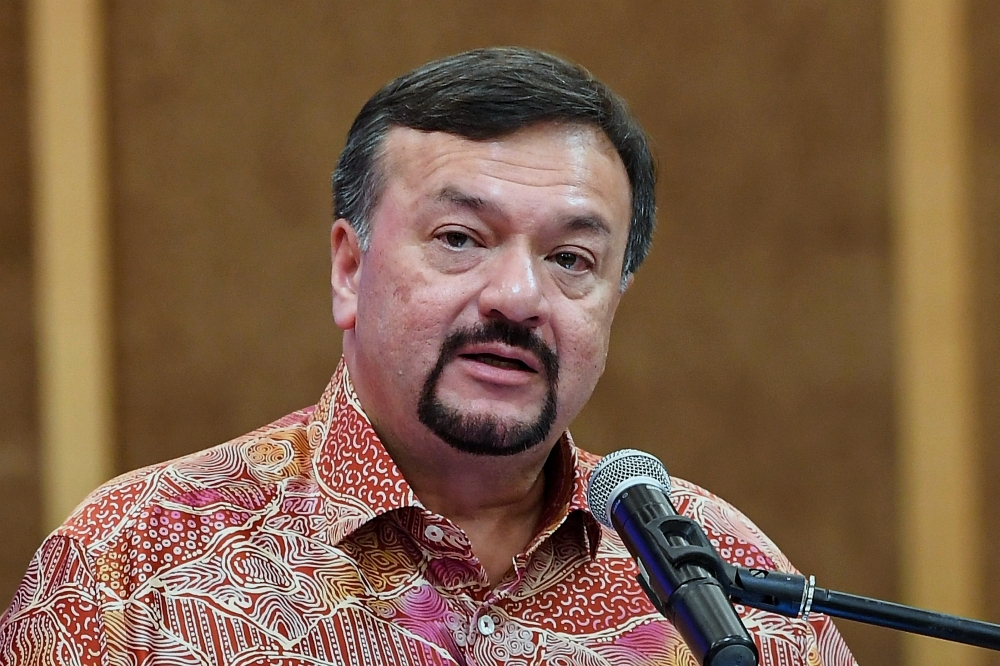
KUALA LUMPUR, April 18 — Countries are moving away from efficiency-driven economic models towards resilience, as rising geopolitical uncertainty reshapes the global economic landscape, including trade and investment strategies.
Finance Minister II Datuk Seri Amir Hamzah Azizan said for decades, global economic expansion had been underpinned by geopolitical stability, allowing businesses to optimise operations and maximise efficiency.
However, he said that as geopolitical conditions become increasingly unpredictable and businesses compete to reposition themselves, that approach is no longer sufficient.
“Once the game starts to manoeuvre more, and people compete with nations to position themselves differently, that efficiency to the ‘nth’ degree is no longer on the table.
“I think we have moved from a just-in-time era to a just-in-case mechanism. So, the roles of countries are actually making sure that you map within your own area,” he said.
Amir Hamzah was a panellist at a session titled “The Future of Economic Integration in a Fragmenting World” at the 2026 Spring Meetings of the International Monetary Fund and the World Bank Group in Washington DC, the United States.
The session was broadcast live on the International Monetary Fund website at 2 am Malaysian time today.
He said governments are now focusing on strengthening their core capabilities and domestic capacity to ensure greater resilience against external shocks.
Amir Hamzah added that the Covid-19 pandemic exposed significant vulnerabilities in global supply chains, particularly in critical areas such as vaccines, medical equipment and healthcare support.
At the same time, he noted that countries were expanding their external engagements by building new partnerships and opening up additional trade channels to avoid overdependence on a single source, allowing economies to remain adaptable when disruptions occur.
Amir Hamzah said that despite the shift towards more bilateral arrangements, the fundamentals supporting global economic growth, including clarity, stability and established rules of engagement, must continue to anchor international relations.
From Malaysia’s perspective, he added that the shift towards building resilience through stronger domestic capacity, diversified supply chains and broader trade linkages had been underway even before the pandemic, but it has since accelerated as the country advances its aspiration to become a high-income nation.
He said this involves attracting higher complexity industries, particularly in the electrical and electronics sector, while strengthening local supply chains to ensure greater resilience against disruptions.
Amir Hamzah said efforts are also focused on developing domestic suppliers and attracting foreign investments that complement existing industrial ecosystems, enabling continuity even during periods of external stress.
At the same time, he said Malaysia is prioritising diversification across industries and markets to strengthen economic resilience and improve its ability to adjust to shifting global conditions.
On universal basic income, Amir Hamzah said the adoption of such a policy depends largely on a country’s level of development and fiscal capacity, with priority given to protecting the most vulnerable segments of society when resources are constrained.
He said that for countries facing fiscal constraints, the immediate priority is to safeguard the most exposed groups while ensuring that broader society can navigate ongoing economic changes to maintain social cohesion during periods of transition and uncertainty.
