
APAD: Enforcement on unlicensed bus stops applies to all operators, no approved terminal at TRX
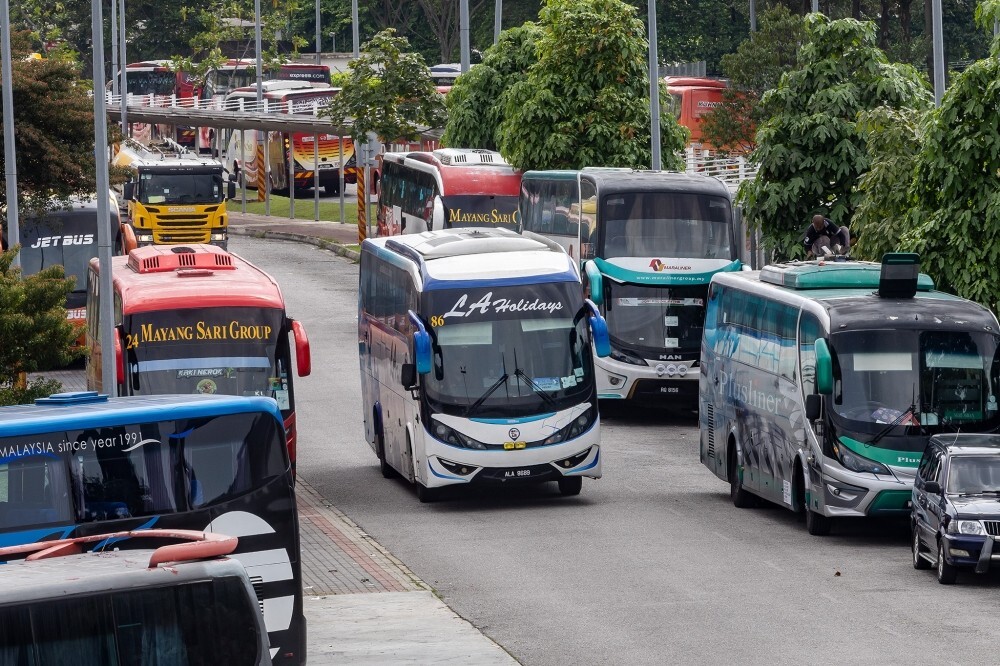
KUALA LUMPUR, June 2 — The Land Public Transport Agency (APAD) has clarified that its enforcement of express bus operations at licensed terminals and transport hubs applies to all operators and is not targeted at any single company.
In a statement APAD said the issue began last year when an express bus operator ceased its Kuala Lumpur city centre services after being instructed to comply with regulations requiring operations to be conducted only at government-licensed terminals.
The agency said the directive was part of ongoing efforts to ensure express bus services nationwide are operated in a more orderly and safe manner in line with existing laws.
APAD said that in January 2026, Corus KLCC Hotel ended its cooperation with the operator after the site was taken over by a private developer for redevelopment purposes.
It added that a temporary enforcement moratorium was granted during the transition period to allow operators to relocate to licensed terminals, and stressed that this did not amount to recognition of Tun Razak Exchange (TRX) as an approved terminal.
The agency said operators were given sufficient time to relocate to authorised terminals or transport hubs but one operator had continued to refuse to move despite the grace period of nearly five months.
As a result, APAD said enforcement action was issued in May 2026 to ensure full compliance with regulations.
APAD also stressed that it has never issued any licence or approval for TRX or any location within the area to operate as a legal express bus terminal or transport hub.
It said the duration of operations at a location does not automatically confer terminal status, adding that TRX itself had not submitted any application to operate as a bus terminal.
Enforcement effective from May 19, 2026 applies to all express bus operators and covers boarding and disembarking activities at unlicensed locations.
APAD said the policy is aimed at improving passenger safety, reducing congestion in city centres, and ensuring better use of structured public transport infrastructure.
The agency warned that roadside or unlicensed boarding and drop-off points pose safety risks to passengers and other road users.
To facilitate compliance, APAD said it has approved several alternative locations as legal transport hubs, including Lalaport, IOI City Mall Putrajaya and 1 Utama, as well as integrated terminals such as Terminal Bersepadu Selatan (TBS) and Terminal Bersepadu Gombak (TBG).
It said these locations provide safe, structured and integrated facilities with good public transport access.
Operators who choose not to use licensed facilities are doing so based on commercial considerations and not due to a lack of available options, it added.
APAD said it remains open to discussions with operators seeking guidance to ensure compliance with regulations.
It added that a competitive and well-regulated intercity bus network requires multiple operators, varied pricing and consistent governance across the industry.
The agency said centralising operations at approved terminals would benefit both passengers and the industry in the long term through safer and more organised services, in line with the government’s public transport agenda.
