
Breaking News
Sultan of Pahang’s sister Tengku Aishah dies, to be laid to rest with full honours
KUANTAN, Aug 26 — The sister of the Sultan of Pahang, Tengku Puteri Seri Kemala Tengku Datuk
...Claims of armed men entering Semporna, Lahad Datu baseless
KUALA LUMPUR, Aug 16 — Claims of a group of armed men entering Semporna and Lahad
...No subsidy cuts planned despite soaring petroleum costs linked to West Asia conflict
KUALA LUMPUR, July 15 — More than 3,500 medical officers left Malaysia’s public healthcare sector over
...Melaka PKR urges calm, seeks consensus on nominated assemblymen issue
MELAKA, July 15 — Parti Keadilan Rakyat (Keadilan) Melaka has urged all parties to not make hasty
...Tunku Zain named new Tunku Panglima Besar of Negeri Sembilan
KUALA PILAH, June 10 — Yang Dipertuan Besar of Negeri Sembilan Tuanku Muhriz Tuanku Munawir today
...Politicians must watch their words, avoid misuse of free speech
KUALA LUMPUR, June 1 — His Majesty Sultan Ibrahim, King of Malaysia, today ordered all political
...
Trump announces tariffs on all countries, including Malaysia at 24pc
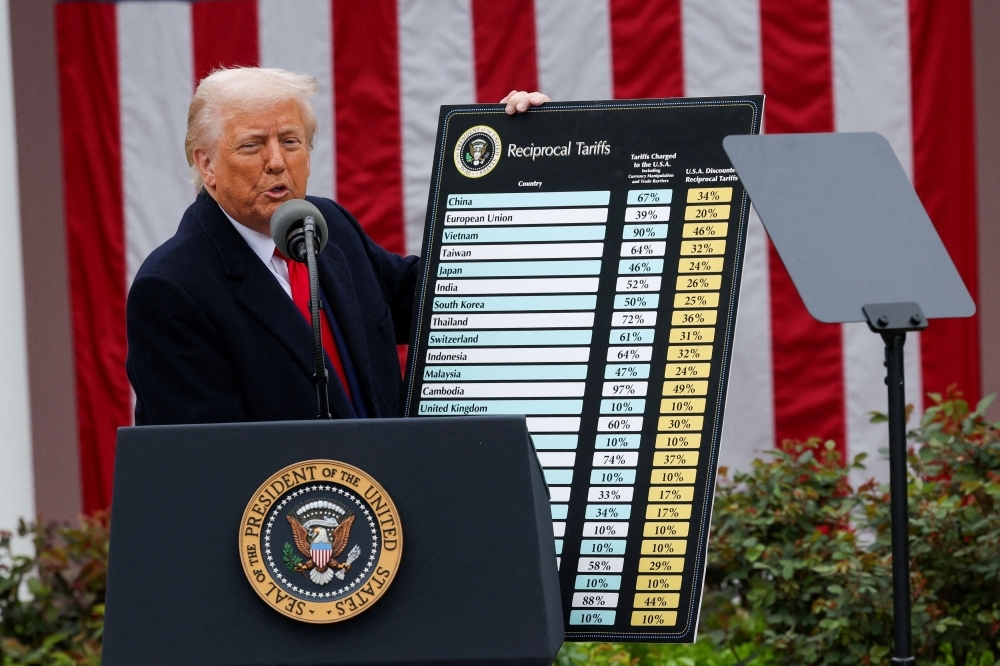
KUALA LUMPUR, April 3 — Malaysia will face a 24 per cent tariff on goods entering the United States beginning April 9, as Washington rolls out sweeping new import duties on its trading partners.
The US government has introduced a broad-based reciprocal tariff policy, with duties ranging from 10 to 50 per cent.
Malaysia’s neighbouring economies are also affected, with Vietnam to face a 46 per cent rate, Cambodia 49 per cent, Thailand 37 per cent, Indonesia 32 per cent, and the Philippines 18 per cent.
Singapore was spared from the higher tier and will remain at the base rate, while China will see a 34 per cent reciprocal tariff.
According to US President Donald Trump, the move is part of a wider effort to address structural trade imbalances, which he said had hollowed out the country’s manufacturing sector and undermined national security.
“The trading relationship between the United States and its trading partners has become highly unbalanced, particularly in recent years,” read the executive order establishing the policy, published on the White House website.
“These structural asymmetries have driven the large and persistent annual US goods trade deficit.
“Permitting these asymmetries to continue is not sustainable in today’s economic and geopolitical environment because of the effect they have on US domestic production.”
The administration also warned that these trade imbalances have weakened critical supply chains and left the US increasingly vulnerable to global disruptions.
The tariffs are expected to remain in place until the US determines that trade terms have become more reciprocal.
