
Indonesia says will halt forest destruction for rice paddies
JAKARTA, Oct 6 — Indonesia said today it will halt a project to raze several million hectares of forest to clear land for rice production, saying it had reached self-sufficiency levels of the staple grain.
The government launched a programme in 2024 to stop relying on rice imports within five years by clearing three million hectares of land for paddies.
Indonesia is one of the world’s most forested countries, and as such a major absorber of planet-warming carbon emissions from mankind’s burning of fossil fuel.
It aims to become a net carbon sink by 2030, with forests and other land use absorbing more carbon than they emit.
However, observers have said continuing forest destruction for agriculture and logging, as well as rampant wildfires, could put Indonesia’s plans at risk.
President Prabowo Subianto hailed an “important victory” this year after data showed countrywide rice demand had been met with domestic production in one of the world’s top consumers of the commodity.
Climate envoy Hashim Djojohadikusumo said on Tuesday the government’s strategic reserve rice stock had reached about 5.3 million tons.
“The government sees no further need for expanding rice cultivation areas in the so-called forest areas,” said Hashim, who is Prabowo’s brother.
He added that the government will focus instead on “intensification measures” using superior seeds, for example, to increase rice yields.
It was not known how much forest had already been replaced by rice paddies before the project was halted.
According to the National Food Agency, a government body that seeks to advance food security, Indonesia produced 34.71 million tonnes of rice in 2025 — exceeding annual demand of 31.19 million tonnes.
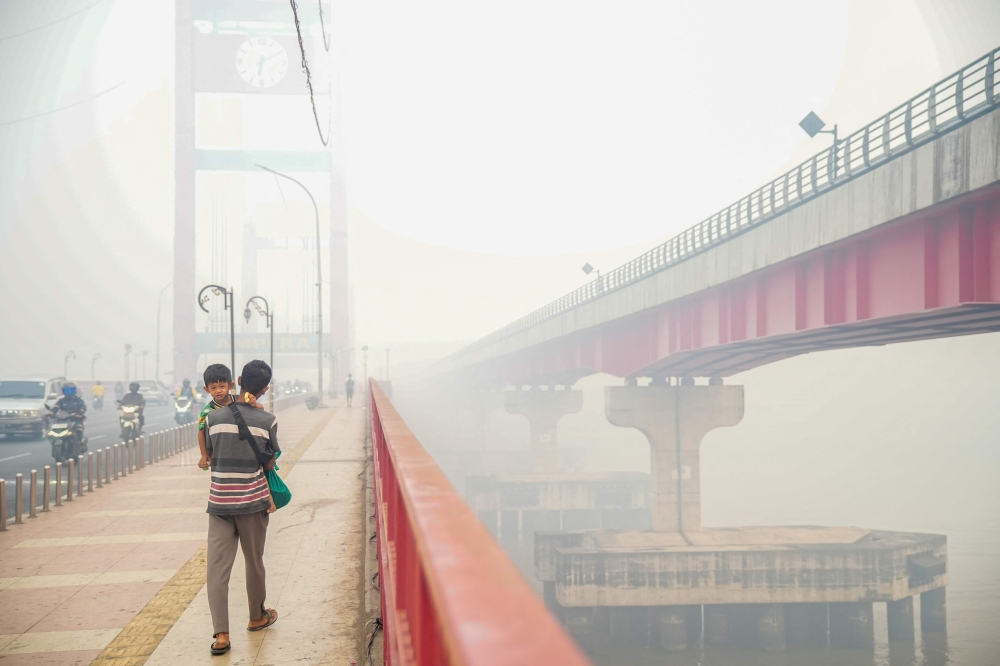
Haze from wildfires consuming forests and peatlands in Indonesia has blanketed neighbouring Malaysia and Singapore for weeks.
Hot, dry conditions associated with the El Nino weather phenomenon have fuelled the fires, which are also linked to land clearing.
