
Bank Negara governor expects Malaysia’s growth to hit upper end of 4-5pc forecast despite energy shock
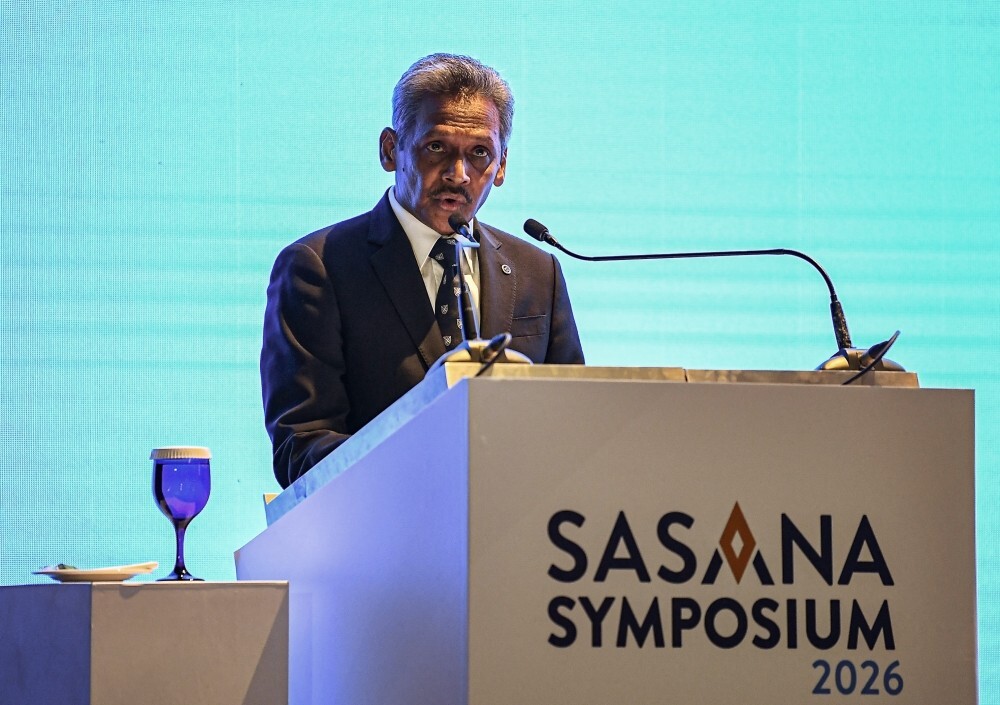
KUALA LUMPUR, July 28 — Despite the energy supply shock, Malaysia’s economy remains well on track to grow by four to five per cent, likely towards the upper end of the range, with manageable inflation in 2026, Bank Negara Malaysia (BNM) Governor Datuk Seri Abdul Rasheed Ghaffour said.
He said Malaysia’s economic fundamentals, reform agenda and commitment to sound economic management have enabled the government to respond when shocks occur.
“As the country’s central bank, BNM has played its part by preserving the macroeconomic stability that allowed reforms to take hold.
“Low and stable inflation, a sound financial system and orderly financial markets have helped create the conditions conducive to economic transformation,” he said in his keynote address at the opening of the two-day Sasana Symposium 2026 (SS2026) here today.
Themed “Reforms for Resilience: Navigating Uncertainties”, SS2026 features discussions on key economic and financial issues, including economic resilience, wages, cost of living challenges, investments, energy security, Islamic finance and private healthcare costs.
Abdul Rasheed said last year, Malaysia’s economy expanded 5.2 per cent, inflation remained contained and the ringgit was the region’s best-performing currency.
On Malaysia’s fiscal position, he said its fiscal deficit narrowed to 3.7 per cent of gross domestic product (GDP) in 2025 from 6.2 per cent of GDP in 2020.
“This has helped rebuild policy space at a time when demand for public resources continues to increase,” he said.
As Malaysia enters its next phase of development, he said the financial system must also evolve alongside it into one that is guided by values, creates meaningful impact and acts with responsibility.
He said BNM’s upcoming Financial Sector Blueprint 2026–2031 will be guided by three aspirations: finance for a more resilient society, finance for a more prosperous society and a future-proof financial system.
Meanwhile, Abdul Rasheed said future economic growth must be sustainable, noting that Malaysia is one of the world’s 17 most biodiverse nations and that the country’s natural wealth is every bit as precious as its economic wealth.
On fiscal reforms, he said sustainable public finances sit at the heart of almost every national policy, as better education, stronger healthcare, modern infrastructure, climate resilience and effective social protection all depend on the government’s fiscal capacity.
Looking ahead, he noted that Malaysia’s medium-term outlook remains favourable.
“Growth is expected to stay firm, while inflation remains manageable. We will continue to do what is needed to maintain price stability in a manner that supports sustainable economic growth,” he added.
