
Taiwan president urges US to approve US$14b arms sale ‘as soon as possible’ as island boosts defence
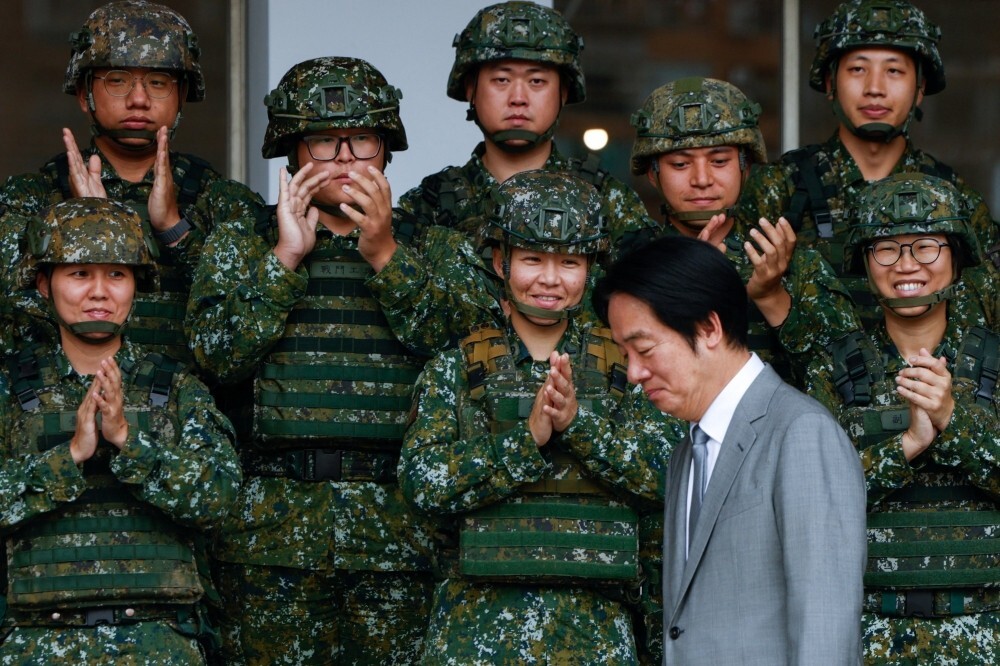
TAIPEI, June 18 — Taiwan’s president said yesterday he hoped the United States would approve a US$14 billion (RM57 billion) arms sale “as soon as possible”, reiterating that the democratic island “rejects unification” with China.
Taiwan relies heavily on US support to deter any potential Chinese attack, and Washington has put pressure on Taipei to increase its defence spending.
But arms sales also complicate ties between Washington and Beijing, which opposes them. In May, US Secretary of State Marco Rubio said that the US$14 billion deal was “under review”.
Taiwan’s President Lai Ching-te said Thursday he still had “high hopes”, adding: “We hope that the arms purchases can be approved as soon as possible.”
“Taiwan’s efforts to safeguard its national security, uphold its democratic and free way of life, and reject unification and the rule of the Chinese Communist Party should not be seen as a provocation against China or a troublemaker in the region,” he said to journalists in Taipei.
The United States formally recognises only China, but is also required under domestic law to provide Taiwan with the means to defend itself.
US authorities said last month they were reviewing a massive arms sale package to Taiwan to ensure the American military had sufficient munitions for its Iran operations.
Lai’s government has vowed to increase overall defence spending to more than three per cent of GDP this year.
It has proposed NT$1.25 trillion (RM163 billion) for weapons purchases, including US-developed arms as well as Taiwan-made drones and other items.
But Taiwanese lawmakers have disagreed over how much to spend on improving defence capabilities.
Opposition parties, which hold a majority in the legislature, passed a US$25 billion special defence budget last month, slashing by a third the one proposed by Lai’s ruling party.
China, which claims Taiwan as part of its territory and has not ruled out using force to seize it, has consistently opposed US arms sales and official exchanges with the island.
