
Mahmoud Abbas’ son wins seat on Fatah leadership body at Palestinian group’s first congress in years
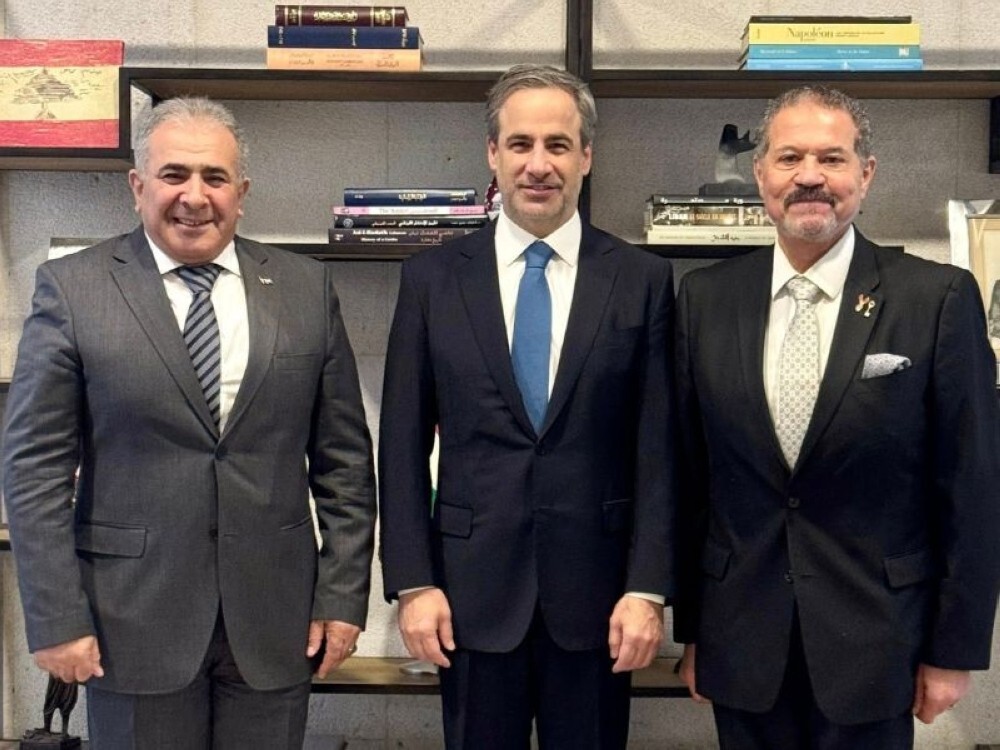
RAMALLAH (Palestinian Territories), May 17 — The son of Palestinian president Mahmoud Abbas won a seat on Fatah’s top decision-making body on Sunday, as initial results emerged from the Palestinian movement’s first congress in years.
Yasser Abbas, 64, a businessman who spends most of his time in Canada, secured a place on the central committee after being appointed around five years ago as his father’s “special representative” – a role that marked his gradual emergence on the political scene.
Jailed Fatah leader Marwan Barghouti topped the preliminary results, retaining his seat on the committee with the highest number of votes, according to figures seen by AFP.
Jibril Rajoub was reelected as the secretary-general of the committee, retaining the seat he has held since 2017.
Palestinian vice president Hussein Al-Sheikh, Fatah deputy leader Mahmoud Al-Aloul and ex-Palestinian intelligence chief Tawfiq Tirawi also held their seats on the body.
Among the newcomers was Zakaria Zubeidi, 50, a former commander of the Al-Aqsa Martyrs Brigades – Fatah’s armed wing in the Jenin refugee camp – who was freed from Israeli prison last year under a prisoner exchange deal with Hamas.
Two women also won seats, including Ramallah governor Laila Ghannam.
The three-day congress, held simultaneously across Ramallah, Gaza, Cairo and Beirut, drew 2,507 voters – a turnout of 94.64 per cent, organisers said.
Fifty-nine candidates competed for 18 seats on the central committee, while 450 vied for 80 seats on the revolutionary council, the party’s parliament.
Counting for the council was still under way.
The congress opened Thursday, with Abbas being reelected as head of the movement.
In his opening address, he vowed to pursue reforms and hold long-delayed presidential and parliamentary elections.
Abbas and the Palestinian Authority are under mounting international pressure to implement reforms and hold elections, amid widespread accusations of corruption and political stagnation, which have eroded its legitimacy among Palestinians.
Fatah has historically been the dominant force within the Palestine Liberation Organisation (PLO), which groups most Palestinian factions but excludes Islamist movements Hamas and Islamic Jihad.
In recent decades, Fatah’s popularity and influence have dwindled amid internal divisions and growing public frustration over the stagnation of the Israeli-Palestinian peace process.
The sense of disappointment led to a surge in support for rival Hamas, which made huge political gains in the occupied West Bank in 2006 elections that it won handily, before going on to expel Fatah from the Gaza Strip almost entirely after a bout of factional fighting.
