
‘Don’t turn middle class into govt’s ATM’, Kepong MP tells Putrajaya over RON95 subsidy reform
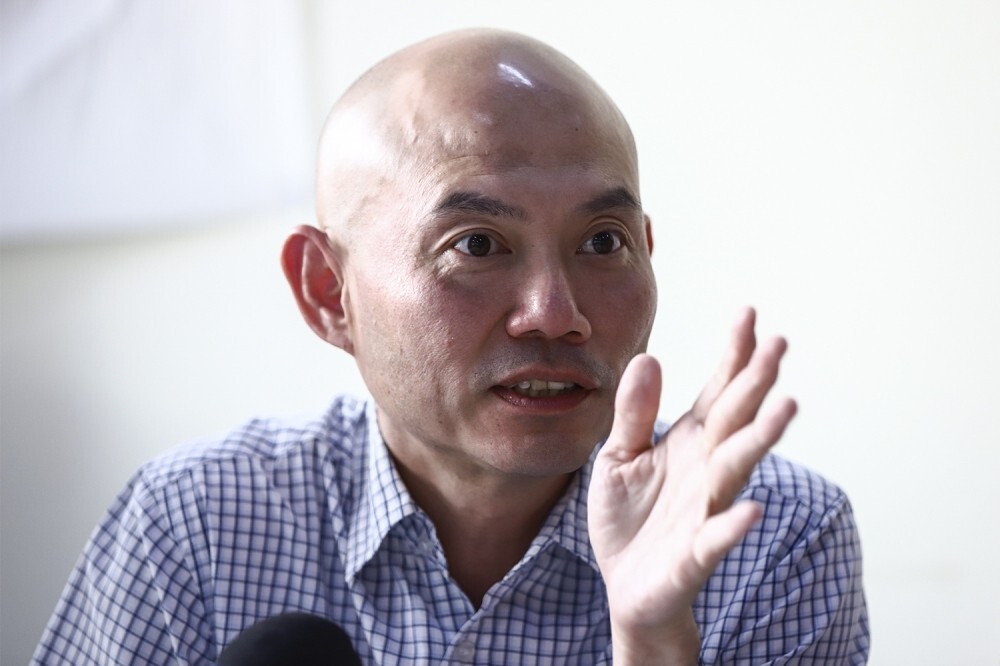
KUALA LUMPUR, May 12 — Kepong MP Lim Lip Eng today urged the government to fully explain its proposed RON95 fuel subsidy reform, warning that middle-class Malaysians should not be penalised under a poorly defined mechanism.
In a statement today, Lim said Putrajaya must clearly disclose who would be affected by the subsidy rationalisation plan, how income would be assessed, and whether factors such as living costs, dependants, loans and commuting needs would be taken into account.
“The government cannot throw around labels like T20, T15, T10 or T5 and expect people not to panic.
“High income does not mean rich. A household above the national T20 line may still struggle badly in Kuala Lumpur, Selangor or the Klang Valley after paying for housing, car loans, children’s education, insurance, elderly parents and daily living costs.
“These are not millionaires. These are ordinary middle-class families working hard just to keep their heads above water,” he said.
Lim said the government must avoid relying solely on income figures while ignoring actual household burdens faced by families.
He questioned whether the Central Database Hub (PADU), which reportedly cost RM85.27 million to develop and implement, would genuinely be used to ensure a fair and data-driven policy.
“If the final decision is still based on broad labels without proper assessment, then what is the point of PADU?” he asked.
Lim said Malaysians were not opposed to subsidy reform itself, but objected to reforms that were unclear or unfair.
He said the government must answer key questions, including whether eligibility would be determined based on individual or household income, and whether factors such as location, number of children, elderly dependants, housing loans, car loans and daily travel distance would be considered.
“If these questions cannot be answered clearly, then the government is not ready to implement the policy,” he said.
Lim warned that the biggest impact may fall on middle-income households who appear financially stable on paper but continue to face significant financial pressures.
“They earn slightly more on paper, but their burden is still heavy. The government sees figures, but not pressure,” he said.
He added that the middle class was already burdened by taxes, rising living costs, housing commitments and education expenses, and should not become “the easiest target whenever the government wants to save money”.
“Do not turn the middle class into the government’s ATM.
“People who work hard, earn more and move up in life should be encouraged, not punished. If Malaysians begin to believe that the harder they work, the more they lose, the country will pay a heavy price,” he said.
Lim also called on the government to immediately disclose the full mechanism for the subsidy reform, including the income threshold, assessment method, appeal process and transition plan.
“Stop creating fear with unclear standards,” he added.
