
No automatic quarantine for Americans repatriated from hantavirus‑struck cruise ship
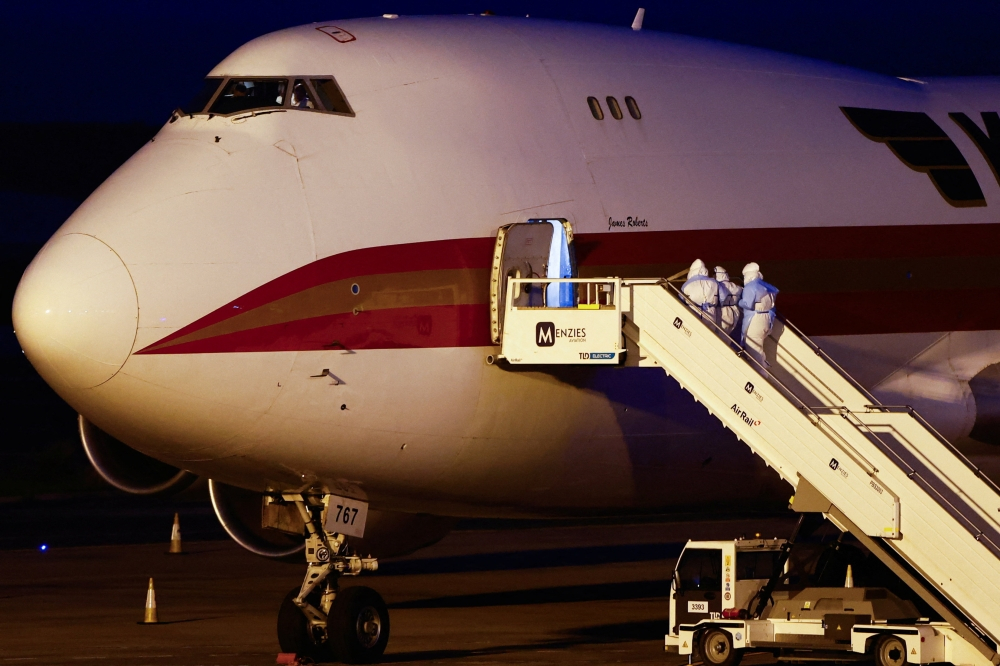
WASHINGTON, May 11 — American passengers evacuated from a cruise ship struck by a deadly hantavirus outbreak will not necessarily be quarantined, a top US health official said yesterday.
Jay Bhattacharya, acting director of the Centres for Disease Control and Prevention (CDC), also urged the US public to remain calm about the hantavirus, saying: “This is not Covid.”
The United States announced Friday that it would organise a repatriation flight for the 17 Americans aboard the MV Hondius, where three passengers have died and others have fallen sick. The ship has arrived in Spain’s Canary Islands.
The US passengers, all of whom are asymptomatic, will be taken to a specialised centre in the rural state of Nebraska, but will not necessarily be quarantined there, Bhattacharya told CNN’s State of the Union news programme yesterday.
“We’re going to interview them and assess them for risk… if they have been in close contact with somebody who was symptomatic,” he said.
The biocontainment unit at the University of Nebraska Medical Centre was activated ahead of the arrivals, with passengers “expected to land in Omaha early Monday morning,” spokesperson Kayla Thomas said in a statement.
“One passenger will be transported to the Nebraska Biocontainment Unit upon arrival,” Thomas said, because the person “tested positive for the virus but (does) not have symptoms.”
The other passengers will go to the National Quarantine Unit for assessment and monitoring, Thomas added.
Following this assessment and depending on the estimated risk, passengers will be allowed “to stay in Nebraska if they’d like, or if they want to go back home, and their home situation allows it, to safely drive them home without exposing other people on the way,” Bhattacharya said.
In either case, passengers will remain under observation for several weeks by health authorities to ensure they do not develop symptoms, he said, as happened with seven other Americans who left the ship earlier in the journey.
According to the CDC, “people are generally only contagious when they exhibit symptoms.”
Bhattacharya said the same protocol was followed during a 2018 outbreak “of this exact strain of the hantavirus,” which was successfully contained.
Responding to criticism that there has been limited communication from US health authorities about the hantavirus risk — six years after the Covid-19 pandemic — he said the situations were not comparable.
“If the threat level were higher, then we would have obviously reacted differently,” Bhattacharya said.
“This is not Covid,” he said. “We shouldn’t be panicking when the evidence doesn’t warrant it.”
