Why did the police arrest, detain and cause the death of sickly Benedict Thanilas?
by Theleaders-Online | January 7, 2020 1:42 am
The eight medicines
Today, 6 January 2020, Janagi was in the witness box. She isn’t tall. Her feet seemed not to touch the floor. She wore a sweater over a red t-shirt. She spoke clearly, mostly in Malay, sometimes through tears and sobs.
The court orderly handed her a clear plastic bag filled with medicines. [1]Janagi put on her reading glasses. She tenderly withdrew each box of medicine.
The medicines were tendered as evidence by the government in the inquest into the death of Janagi’s husband, Benedict Thanilas, 44 years. Benedict died in the Jinjang lockup on 10 July 2017.
Janagi carefully probed each box with her eyes. She quietly opened each box. She took out the strips of tablets. She probably checked to see how many tablets had been consumed. She returned the strips into the boxes.
After several minutes of silent examination, she answered the question which had been put to her by the Conducting Officer (DPP). “Yes, these are the medicines I handed over to the police on the day they took my husband Benedict.”
Earlier, Janagi, led by questions put to her by the DPP, had told the court about the day her husband was arrested. It was on 29 June 2017, at about 10:30 in the morning.
Janagi and her husband were in bed. There was a knock on the door. A woman police officer identified herself. [2]Janagi let her in. The officer confirmed that Benedict was at home. She made a phone call. Two officers arrived. They arrested Benedict.
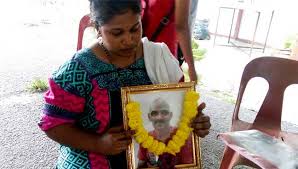
Janagi said she protested to the officers that Benedict was a heart patient, that he’d had a heart bypass operation, had just had a stroke and wasn’t stable. Benedict couldn’t walk without help. He had little sight in his right eye. She told them he had a host of illnesses including diabetes and hypertension.
Janagi said one of the policemen said, “don’t bluff.” He added that a person can have a bypass operation up to three times and, in any case, they would take him for a medical check-up.
Janagi showed them Benedict’s medicines. She showed them his hospital appointment card. She showed them a stack of hospital-issued documents.
But the policemen insisted that they had to take Benedict to the Sentul Police Station. They took Benedict. They didn’t take his medicines or the hospital documents.
Janagi gathered Benedict’s medicines. She rounded up her three children. With the medicines and the children, she went to the Sentul Police Station. It was 12.30 pm. She asked for her husband. The police said he hadn’t been brought there.
Janagi waited. Her children cried and were restless. After half an hour, she went home.
At 3.30 pm, Janagi got a phone call from the police. They told her to bring the medicines to the 5th floor of the Sentul police station. She went back, with the medicines.
There were eight different medicines, including liquid Insulin for injection (as the coroner noted, Insulin has to be refrigerated). Janagi also brought the hospital documents.
The police told Janagi that Benedict would be detained for 60 days under LLPK (the Malay acronym for “Special Measures” under the Dangerous Drugs Act, 1985).
Janagi told the court that she emphasized to the police – two officers whose names she cannot remember but believes she can identify – that if Benedict missed his medication, he would become seriously ill, would vomit and become very weak.
The police officers assured her that Benedict would receive his medicines as prescribed. They asked her to give them just sufficient medicines for one week. They made a photocopy of his hospital appointment card. His next appointment was on 4 July. (So far, there is no evidence that the police took him to the appointment.)
Janagi told the court that at home, she gave the medicines to Benedict at the prescribed times. No one asked her what she thought about the balance of medicines. Did she think Benedict had been given the medicines she knew were essential to his life? She was not asked. She did not say.
I think everyone in the courtroom knew there was no need for her to say. We all knew the answer. If it was a supply for only one week – as she had testified – there shouldn’t have been any medicines left.
Janagi’s last memory of her husband in Jinjang lockup
On the morning of 3 July 2017, four days after Benedict was taken, Janagi went to the Sentul police station. She obtained an authorization letter to visit Benedict once per week in the Jinjang lockup. Right away, that afternoon, she went to see Benedict.
M Visvanathan, Janagi’s lawyer, showed the court a video of Janagi’s visit.
The video shows Janagi and her sister-in-law in the visiting room – a long corridor with glass panes on one wall: visitors on one side, detainees on the other side. Each pane is about four feet wide and is separated from the next pane by a column.
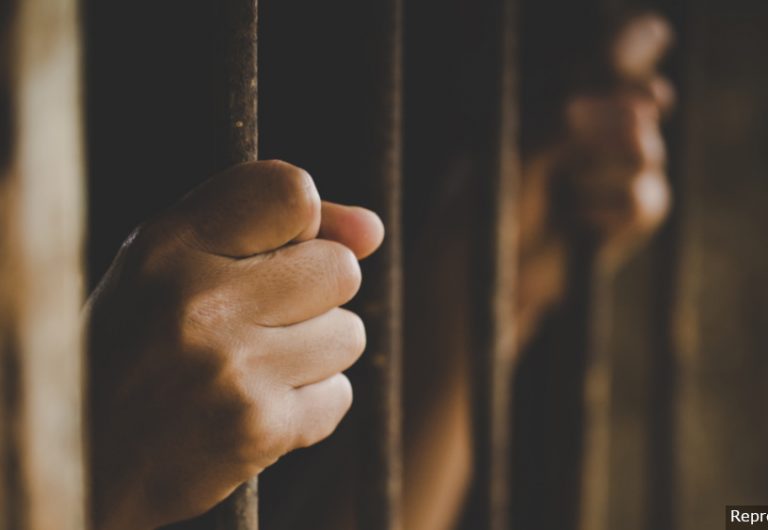
On the visitors’ side, at the bottom of the pane, is a concrete ledge. The ledge appeared to be at a height of over three feet and about two feet wide. (It was hard to see from the courtroom gallery.)
Janagi was unable to hear Benedict. Desperate to speak with him, she climbed – precariously – onto the shelf. She placed her left ear on the pane and spoke into a certain spot. Visvanathan explained that there were some holes at that spot, so her voice could travel through the glass to her husband. It’s a wonder she didn’t fall down and hurt herself.
Visvanathan pointed to the video and addressed Janagi. He said – and she agreed, in a choking, sobbing voice – that Benedict’s sleeve was wet. It was wet because he was shedding a lot of tears and constantly wiping them away on his shirt sleeve.
Janagi said Benedict kept asking about herself and their children. She said he looked very anxious (“dia nampak runsing”). She said he didn’t answer when she asked if he was taking the medicines he needed. She told him to keep asking the police to take him to the hospital if he didn’t feel well.
The visit lasted 10-15 minutes. That was the last time she saw him alive.
Benedict arranges an RM150 phone call to speak to Janagi
Janagi told the court that on 7 July, about 10.30 pm, she received a call from a cell phone number which she didn’t recognize. Benedict was on the line. He gave her a bank account name and number. He said it belonged to a lockup officer. He told her to deposit RM150 into the account. He said to inform the number after the payment was made. Then she could call him.
Janagi asked her brother to deposit the money. He did.
Janagi called the number. She spoke to Benedict. They spoke for 10 minutes and 48 seconds. Benedict told her he had been taken to the Sentul police station the day before to give a statement. He said he was weak, cold, tired and had not eaten. She asked whether he had taken his medicine. He did not answer her question. He told her to take care of herself and the children. He cried a lot.
Janagi is called to the General Hospital, Kuala Lumpur to collect her husband
On 10 July 2017, the police called Janagi and asked her to rush to the Emergency Room in the General Hospital, Kuala Lumpur. When she got there, the hospital staff told her Benedict wasn’t there.
Janagi then received a call from an Inspector Sharizan. He told her to go to the Forensics Department. She didn’t know what “forensics” was. She asked around and found the way.
At the Forensics Department a male Indian doctor told her that Benedict had been brought in dead that morning.
Janagi wasn’t allowed to see Benedict’s body until after she met with a magistrate. The magistrate asked her to identify some medicines which were said to have been brought from the lockup. After she identified them as belonging to Benedict, she was allowed to see his body.
Janagi was told Benedict’s body would be released after a post-mortem was conducted.
Benedict comes home and is buried
On 10 July, about midnight, Benedict’s body was delivered to his home. The next day, at 10.30 am, a funeral service was held in his church. Directly after the service his body was taken to Sungai Buloh cemetery and buried.
After burying her husband and father of her children, at 2.45 pm, Janagi made a police report about the death in custody of her husband Benedict. She did so because she hoped to learn how he died. And she hoped for justice.
Questions arising
First, why did the police arrest and detain a very sick man who could barely walk, was semi-blind, was on eight different medications and could demonstrate with legitimate documents (issued by government hospitals including the National Heart Institute, IJN), that he was seriously ill?
Second, since the police knew Benedict was dependent for his life on taking the prescribed medicines at the prescribed intervals, what arrangements did they make in the lockup to meet his special needs and what evidence is there to demonstrate that his needs were in fact met?
Third, what kind of country do we live in where a visitor has to climb onto a ledge to speak to a detainee? (A detainee who is merely a suspect, NOT convicted of any offence.)
Fourth, who has been held accountable by JIPS (the police Department for Integrity and Conformance to Standards) for the RM150 phone call and for other police misconduct in the case of Benedict’s death in custody 30 months ago?
Fifth, why are there no observers from retired or serving police officers societies or unions to learn about what happens in lockups and who is held accountable? (I can’t help feeling that junior officers are likely to be blamed for failures of senior police officers, prison visitors and the Home Ministry.)
Sixth, why isn’t the media present during the inquiry? Is it because deaths in custody are so common and such “an ordinary fact of life” that they’re no longer newsworthy?
The inquiry continues at 9.00 am on 20 January, 2020 in Courtroom 15, Level 1, Duta Court Complex, Kuala Lumpur. Please come if you can and learn for yourselves the disgraceful state of Malaysian lockups and the pressures this places on suspects, families and police officers.
Rama Ramanathan is an activist for Citizens Against Enforced Disappearances
The views expressed here are those of the author/contributor and do not necessarily represent the views of The Leaders Online.
- She wore a sweater over a red t-shirt. She spoke clearly, mostly in Malay, sometimes through tears and sobs.
The court orderly handed her a clear plastic bag filled with medicines. : https://theleaders-online.com/suhakams-immediate-focus/ - Janagi and her husband were in bed. There was a knock on the door. A woman police officer identified herself. : https://theleaders-online.com/death-in-custody-incapacity-for-outrage-in-new-malaysia/
Source URL: https://theleaders-online.com/why-did-the-police-arrest-detain-sickly-benedict-thanilas/